
Amnestus
Dallas, 1851
burrowing bugs
Species Guides
5- Amnestus basidentatus
- Amnestus pallidus(pallid burrowing bug)
- Amnestus pusillus
- Amnestus spinifrons(burrowing bug)
- Amnestus trimaculatus
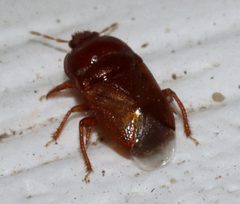
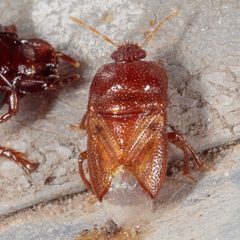
Amnestus is a of burrowing bugs in the Cydnidae, Amnestinae. The genus contains more than 40 described , making it one of the most diverse genera of burrowing bugs. Species are primarily distributed in the Americas, with particularly high diversity in Mexico where at least 29 species occur. Members of this genus are associated with soil and leaf litter , with some species showing specific associations with Ficus fruits.
Pronunciation
How to pronounce Amnestus: /ˈæmnɛstəs/
These audio files are automatically generated. While they are not always 100% accurate, they are a good starting point.
Identification
Amnestus are distinguished from other burrowing bugs by the structure of the prosternal carina and external scent efferent system. Species-level identification relies on examination of male genitalia, particularly paramere shape, as well as fore and hind leg . Nymphal stages can be separated by body size, coloration, and punctuation patterns on the .
Images
Habitat
have been collected from riparian vegetation remnants in mesophilous forest, leaf litter, and soil . Some species show specific association with fruits of Ficus species (Moraceae). Specimens are typically collected using Berlese-Tullgren funnels and Winkler extractors, indicating a ground-dwelling, litter-inhabiting lifestyle.
Distribution
is distributed in the Americas. Mexico harbors exceptional diversity with at least 29 described , including 28 species documented from Chiapas and Veracruz states. The genus extends into the United States, with at least one species (A. brunneus) intercepted at the Texas border. Distribution records also include Vermont, USA.
Seasonality
In Veracruz, Mexico, and nymphs have been collected during both rainy (July) and dry (April) seasons, indicating year-round activity in at least some regions.
Host Associations
- Ficus - associated with fruitAt least one has documented association with fruits of several Ficus species (Moraceae)
Life Cycle
Nymphal stages are known and described for some . stages show progressive development in size, body coloration, and punctuation patterns between instars. Both nymphs and occur together in sampled .
Behavior
Burrowing is characteristic, consistent with the for the . are ground-dwelling and inhabit soil and leaf litter layers.
Human Relevance
At least one (Amnestus brunneus) has been intercepted as a potential agricultural pest in commercial shipments, suggesting potential economic significance. The interception in celery shipments at the Texas border represents a first-in-nation discovery for this species, indicating biosecurity concern.
Similar Taxa
- Other Cydnidae generaAmnestus is distinguished by -level characters (Amnestinae) including prosternal carina structure and external scent efferent system
More Details
Taxonomic diversity
The is undergoing active taxonomic revision, with eleven new described from Chiapas, Mexico alone in recent years. Lectotypes have been designated for historically problematic species including A. bergrothi and A. stali, which were originally described from female specimens only.
Collection methodology
Recent increases in specimen acquisition have resulted from targeted collecting in specialized and employment of diverse trapping techniques, particularly soil and litter extraction methods.
Sources and further reading
- BugGuide
- Wikipedia
- GBIF taxonomy match
- iNaturalist taxon
- NCBI Taxonomy
- Catalogue of Life
- Amnestus-brunneus - Entomology Today
- CBP Intercepts Rare Insect Pest at Texas Border
- burrowing beetle cbp Archives - Entomology Today
- Estadios ninfales de Amnestus rugosus (Hemiptera: Cydnidae)
- The genus Amnestus Dallas (Hemiptera: Heteroptera: Cydnidae: Amnestinae) in Mexico, with the description of eleven new species from Chiapas
- LIFE CYCLE AND DESCRIPTION OF A NEW SPECIES OF AMNESTUS DALLAS (HEMIPTERA-HETEROPTERA: CYDNIDAE) ASSOCIATED WITH THE FRUIT OF SEVERAL SPECIES OF FICUS (MORACEAE) IN MEXICO