
Aneurus inconstans
Uhler, 1871
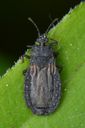
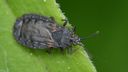
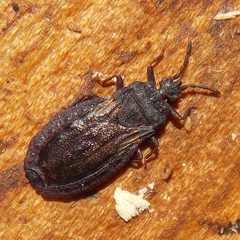
Aneurus inconstans is a flat bug in the Aradidae, first described by Uhler in 1871. It belongs to the Aneurus, which comprises small, dorsoventrally flattened true bugs. The species is documented from North America, with specific records from Vermont. Like other aradids, it likely inhabits decaying wood or bark environments.
Pronunciation
How to pronounce Aneurus inconstans: /əˈnʊərəs ɪnˈkɒnstənz/
These audio files are automatically generated. While they are not always 100% accurate, they are a good starting point.
Identification
Images
Appearance
Small, dorsoventrally flattened true with a broad, oval body shape characteristic of the Aradidae. Body appears strongly flattened, an for living in tight spaces under bark. are relatively long and . Coloration and specific markings are not well documented in available sources.
Habitat
Associated with woody substrates, particularly under bark of dead or decaying trees. Specific microhabitat preferences within this are not documented.
Distribution
Documented from North America, with confirmed records from Vermont, United States. Broader North American range is indicated but not precisely defined.
Similar Taxa
- Other Aneurus species share the flattened body form and bark-dwelling habits; precise identification requires examination of genitalic structures and antennal proportions.
- Other Aradidae generaAll flat bugs share extreme dorsoventral flattening; Aneurus is distinguished by specific antennal and body proportions, and male genitalic .
More Details
Taxonomic history
Described by Philip R. Uhler in 1871, a prominent American entomologist who documented numerous North American Hemiptera. The specific epithet 'inconstans' suggests variable characteristics noted in the original description.
Observation data
iNaturalist records 44 observations, indicating the is encountered infrequently, consistent with the cryptic habits of aradid flat bugs.