
Nepa apiculata
Uhler, 1862
waterscorpion
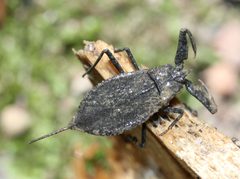
Nepa apiculata is a of waterscorpion in the Nepidae. It possesses a flattened, leaf-shaped body that provides camouflage among aquatic vegetation and debris. The species is active from spring through fall and has been documented to hibernate during winter months and drought conditions. It is a predatory aquatic insect found in streams and lentic across eastern North America.
Pronunciation
How to pronounce Nepa apiculata: /ˈne.pa ˌa.pɪˈkuː.la.ta/
These audio files are automatically generated. While they are not always 100% accurate, they are a good starting point.
Identification
Images
Habitat
Streams, particularly among debris and vegetation. sites have been documented in stream debris during early spring and autumn. Also inhabits lentic (still water) environments.
Distribution
Eastern North America including Canada and the United States. Historically considered rare and restricted to southern Wisconsin, but more recent collections indicate wider distribution than previously recognized. Also reported from Central America.
Seasonality
Active from spring through fall. Hibernates during winter and has been observed to enter dormancy during drought conditions.
Diet
on a wide variety of aquatic .
Life Cycle
Includes , nymphal, and stages. stages have been described in taxonomic literature. Laboratory rearing methods have been developed for studying development.
Behavior
Uses leaf-shaped body for camouflage among aquatic debris and vegetation. Hibernates in stream debris during winter months and can enter dormancy during drought periods. Predatory, using forelegs to capture prey.
Ecological Role
in freshwater aquatic , controlling of aquatic .
Human Relevance
Subject of entomological research; and rearing methods have been studied in laboratory settings. No significant direct economic impact documented.
Similar Taxa
More Details
Historical rarity
In Wisconsin, was historically considered rare with only 11 specimens collected over 25 years by Hilsenhoff (1984); recent collections show it is more widely distributed than previously thought
Laboratory studies
and stages have been described through laboratory rearing studies, providing foundational knowledge for the
Sources and further reading
- BugGuide
- Wikipedia
- GBIF taxonomy match
- iNaturalist taxon
- NCBI Taxonomy
- Catalogue of Life
- Grasshoppers of Colorado
- Rejection in the World of Cabbage White Butterflies | Bug Squad
- Grasshoppers of Colorado
- Species Records and Accounts
- Fall Armyworm in Nepal: The Importance of Early, Targeted Intervention
- IPM Adoption a Challenge in Developing Countries: Lessons From Nepal
- Life History and Laboratory Rearing of Nepa apiculata (Heteroptera: Nepidae), with Descriptions of Immature Stages1
- Distribution of the Water Scorpion <i>Nepa Apiculata</i> (Hemiptera: Nepidae) in Wisconsin