
Melanorhopala
Stål, 1873
Species Guides
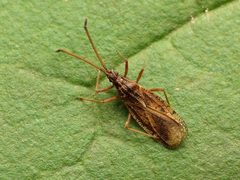
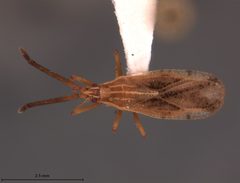
2Melanorhopala is a of lace bugs ( Tingidae) containing five described . The genus was established by Carl Stål in 1873. Species in this genus are small, flattened true bugs with the characteristic reticulated wing covers typical of lace bugs. The genus is part of the superfamily Tingoidea within the infraorder Cimicomorpha.

Pronunciation
How to pronounce Melanorhopala: //mɛˌlænoʊroʊˈpælə//
These audio files are automatically generated. While they are not always 100% accurate, they are a good starting point.
Identification
Members of Melanorhopala can be distinguished from other lace bug by their specific wing reticulation patterns and body proportions, though precise diagnostic features require examination of . The genus name refers to dark coloration combined with the characteristic 'rhopala' (club-like) structure found in some tingids. -level identification relies on subtle differences in pronotal and hemelytral .
Images
Distribution
The has been recorded from North America based on descriptions, though comprehensive distribution data for the genus as a whole is limited. Individual species have type localities in the United States.
Similar Taxa
- CorythuchaAnother large of lace bugs in Tingidae with similar reticulated ; Melanorhopala generally have more compact body proportions and different pronotal projections.
- StephanitisCommon lace bug with overlapping distribution; Stephanitis often have more pronounced hood-like pronotal structures compared to Melanorhopala.
More Details
Species diversity
The contains five described : M. balli (1928), M. clavata (1873), M. froeschneri (1986), M. infuscat (1917), and M. infuscata (1917). The latter two epithets represent a probable lapsus or correction in the original literature.
Taxonomic history
The was erected by Stål in 1873 with M. clavata as the type . The most recently described species, M. froeschneri (1986), was named in honor of the prominent heteropterist J. A. Slater Froeschner.