
Calotingis knighti
Drake, 1918
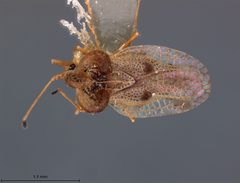
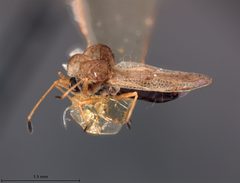
Calotingis knighti is a of lace bug in the Tingidae, first described by Drake in 1918. It is known from limited occurrence records in Central America and North America. As with other tingids, it likely feeds on plant sap using , though specific associations remain undocumented.
Pronunciation
How to pronounce Calotingis knighti: //ˌkæloʊˈtɪndʒɪs ˈnaɪtaɪ//
These audio files are automatically generated. While they are not always 100% accurate, they are a good starting point.
Identification
As a member of Tingidae, C. knighti possesses the diagnostic reticulated, lace-like pronotum and forewings characteristic of lace bugs. The Calotingis is distinguished within the by specific pronotal and areolate wing patterns, though precise diagnostic features for C. knighti require examination of type material. -level identification in this genus typically requires microscopic examination of wing venation and pronotal expansions.
Images
Distribution
Recorded from Middle America (Central America) and North America. GBIF holds 79 distribution records. Specific countries and precise range boundaries are not documented in available sources.
Similar Taxa
- Other Calotingis speciesCongeneric share the general body plan and reticulated wing structure; differentiation requires examination of pronotal and wing areolation patterns.
- Other Tingidae generaLace bugs in related (e.g., Corythucha, Stephanitis) share the characteristic lace-like appearance; Calotingis is distinguished by pronotal and wing areolation patterns.
More Details
Taxonomic history
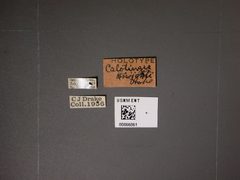
Described by Carl J. Drake in 1918, a prolific authority on the Tingidae. The epithet 'knighti' likely honors an entomological colleague, though the namesake is not specified in available sources.
Observation scarcity
Only 4 observations recorded in iNaturalist as of data retrieval, suggesting either genuine rarity, cryptic habits, or undercollection.