
Plagiognathus
Fieber, 1858
Species Guides
35- Plagiognathus albatus(Sycamore plant bug)
- Plagiognathus alboradialis
- Plagiognathus arbustorum(Common Nettle Flower Bug)
- Plagiognathus atricornis
- Plagiognathus blatchleyi(Blatchley's mirid)
- Plagiognathus brevirostris
- Plagiognathus brunneus
- Plagiognathus chrysanthemi(trefoil plant bug)
- Plagiognathus cornicola
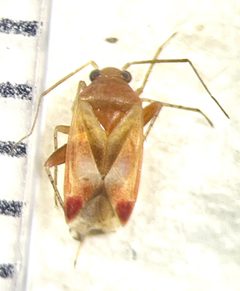
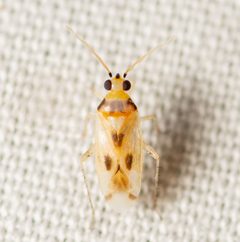
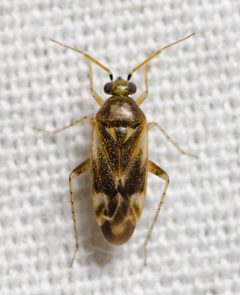
Plagiognathus is a large of plant bugs in the Miridae, comprising over 120 described . Members are commonly known as jumping tree bugs or plant bugs. The genus exhibits diverse associations with various flowering plants, including agricultural crops and wild species. Individual species show specialized relationships with particular host plants, though broader patterns across the genus remain incompletely documented.
Pronunciation
How to pronounce Plagiognathus: //ˌpleɪˌdʒiˈoʊnəθəs//
These audio files are automatically generated. While they are not always 100% accurate, they are a good starting point.
Images
Distribution
occur across the Palearctic Region and North America. Documented records include Turkey, with specific locality data from Karaman province, and Ontario, Canada.
Diet
Phytophagous. Plagiognathus chrysanthemi feeds on birdsfoot trefoil (Lotus corniculatus). Plagiognathus ozgurkocaki is associated with the Phlomis leucophracta (Lamiaceae). plant associations for most are unknown.
Host Associations
- Lotus corniculatus (birdsfoot trefoil) - plantDocumented for Plagiognathus chrysanthemi; pest of cultivated birdsfoot trefoil in Ontario
- Phlomis leucophracta (Lamiaceae) - plantDocumented for Plagiognathus ozgurkocaki; locally in Karaman, Turkey
Life Cycle
Five nymphal instars precede the stage. The fifth instar of Plagiognathus albatus has been described.
Human Relevance
Plagiognathus chrysanthemi is recognized as an agricultural pest of birdsfoot trefoil in Ontario, Canada. Other have no documented economic impact.
More Details
Taxonomic scope
The contains at least 110-123 described , making it one of the larger genera within Miridae. Species-level identification requires examination of genitalic structures and detailed morphological characters.
Host specificity
Available evidence suggests varying degrees of specialization among . Plagiognathus ozgurkocaki appears unique among Palearctic in its exclusive association with Phlomis leucophracta, while P. chrysanthemi is a documented pest of a cultivated legume. The extent of oligophagy versus polyphagy across the is unknown.
Sources and further reading
- BugGuide
- Wikipedia
- iNaturalist taxon
- NCBI Taxonomy
- Catalogue of Life
- Life History of Plagiognathus albatus (Hemiptera: Miridae), with a Description of the Fifth Instar
- Observations on the Biology of Plagiognathus chrysanthemi (Hemiptera: Miridae), a Pest of Birdsfoot Trefoil in Ontario
- A new species of Plagiognathus (Heteroptera: Miridae) associated with the locally endemic Phlomis leucophracta (Lamiales: Lamiaceae) from Karaman, Turkey