
Oeciacus
Stål, 1873
swallow bug, barn swallow bug
Species Guides
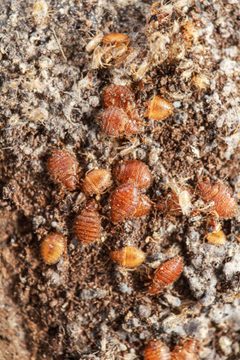
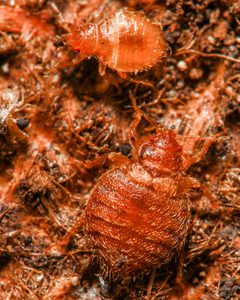
1- Oeciacus vicarius(American swallow bug)
Oeciacus is a of haematophagous in the Cimicidae, historically recognized as swallow . Molecular phylogenetic studies have shown the genus to be nested within Cimex, leading to its proposed synonymy with that genus. The three described —O. hirundinis, O. montandoni, and O. vicarius—are specialized of swallows (Hirundinidae), with distinct morphological characters associated with this relationship. The American swallow bug O. vicarius is particularly well-studied, occurring primarily in cliff swallow colonies across North America.
Pronunciation
How to pronounce Oeciacus: //oʊˈsaɪ.əkəs//
These audio files are automatically generated. While they are not always 100% accurate, they are a good starting point.
Identification
Historically distinguished from Cimex by morphological characters associated with swallow specialization; however, molecular evidence indicates these traits represent host-associated phenotypic convergence rather than phylogenetic distinctiveness. Diagnostic morphological characters remain valid for -level determination.
Images
Habitat
Associated with nests of swallows (Hirundinidae), particularly mud nests of cliff swallows (Petrochelidon spp.) and nests of house martins. Inhabits bird colonies rather than human dwellings.
Distribution
Holarctic region. O. vicarius: North America. O. hirundinis: Europe (recorded from Denmark, Norway, Sweden). O. montandoni: distribution not specified in sources.
Seasonality
Activity cycles tied to presence of swallows and nest availability; seasonal patterns observed in field studies but specific timing not detailed in available sources.
Diet
Haematophagous; feeds on blood of swallows (Hirundinidae). O. vicarius has been observed attacking humans but does not establish on human .
Host Associations
- Petrochelidon lunifrons - primary cliff swallow; chief of O. vicarius in North America
- Petrochelidon pyrrhonota - primary cliff swallow; of O. vicarius
- Delichon urbicum - primary house martin; of O. hirundinis, virus studies
- Hirundo rustica - secondary/uncertainbarn swallow; records for O. vicarius probably erroneous
- Homo sapiens - incidentalreadily attacks but does not adapt to human habitation
Behavior
Exhibits seasonal and daily activity cycles synchronized with presence. Does not readily adapt to unnatural hosts in captivity. Disperses from swallow nests to nearby human habitations, leading to human-wildlife conflict and nest destruction.
Ecological Role
of colonial swallows; potential of (Usutu virus detected in O. hirundinis).
Human Relevance
Perceived as nuisance pest when dispersing from swallow nests to human buildings; attacks humans readily when encountered but does not establish . Historical complaints led to systematic destruction of swallow nests in Canada (Ontario, Vancouver). Implicated as possible /.
Similar Taxa
- CimexOeciacus is phylogenetically nested within Cimex based on molecular evidence; morphological convergence in -associated traits previously obscured this relationship. Proposed as synonym of Cimex.
- Oeciacus hirundinisEuropean distinct from O. vicarius; occurs on different swallow .
Misconceptions
Barn swallows were historically blamed for spreading bedbugs to human habitations, leading to persecution; however, records of O. vicarius from barn swallows appear erroneous, and the does not establish on humans despite occasional attacks.
More Details
Taxonomic status
Molecular phylogenetic analysis (Booth et al., 2015) demonstrated Cimex is with respect to Oeciacus, leading to proposal of Oeciacus as a synonym of Cimex. The swallow-associated phenotype results from specific association rather than deep phylogenetic divergence.
Virus detection
Usutu virus detected in O. hirundinis from house martin nests, with implications for virus in temperate zones.
Sources and further reading
- BugGuide
- Wikipedia
- GBIF taxonomy match
- iNaturalist taxon
- Catalogue of Life
- THE STATUS OF THE BARN SWALLOW BUG. OECIACUS VICARIUS HORVATH
- The American Swallow Bug, Oeciacus vicarius Horvath (Hemiptera, Cimicidae)
- Field Observations on the Life Cycle of Ixodes baergi and Some Seasonal and Daily Activity Cycles of Oeciacus vicarius (Hemiptera: Cimicidae), Argas cooleyi (Acari: Argasidae), and Ixodes baergi (Acari: Ixodidae)
- Molecular evidence places the swallow bug genus Oeciacus Stål within the bat and bed bug genus Cimex Linnaeus (Heteroptera: Cimicidae)
- Detection of Usutu virus in a house martin bug Oeciacus hirundinis (Hemiptera: Cimicidae): implications for virus overwintering in a temperate zone.