
Ledrinae
Fairmaire, 1855
Flat-headed Leafhoppers
Genus Guides
1Ledrinae is a of leafhoppers within Cicadellidae, comprising approximately 300 across 38 in five tribes (Ledrini, Rubrini, Xerophloeini, Afrorubrini, and Hespenedrini). The group represents an early-branching, morphologically distinctive lineage considered one of the oldest within Cicadellidae. A major 2009 revision redefined the subfamily's boundaries, removing Stenocotini and Thymbrini to Tartessinae and synonymizing Petalocephalini with Ledrini. Diversity is concentrated in Australia, Africa, and the Oriental region, with China alone hosting over 180 species.
Pronunciation
How to pronounce Ledrinae: /lɛˈdrɪniː/
These audio files are automatically generated. While they are not always 100% accurate, they are a good starting point.
Identification
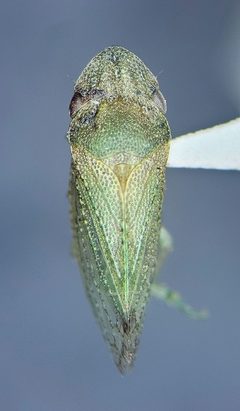
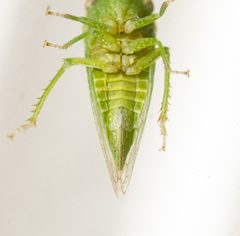
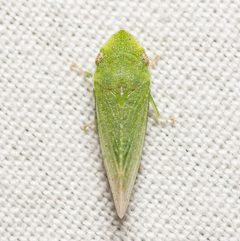
Distinguished from other Cicadellidae by a dorsoventrally flattened body, ocelli positioned near the crown, and forewings with a dense reticulate venation pattern. Coloration is typically green or brown. The flattened and body profile separates Ledrinae from most other leafhopper , which tend toward more cylindrical or rounded body forms.
Images
Habitat
Broadleaf forests; specific associations include oak (Quercus) woodland.
Distribution
Worldwide distribution with centers of diversity in Australia, Africa, the Indomalayan region, and the Oriental region. China contains 28 and over 180 . The tribe Afrorubrini is restricted to southern Africa; Hespenedrini is to Chile; Rubrini is restricted to Australia.
Similar Taxa
- TartessinaeFormerly included tribes Stenocotini and Thymbrini, now removed to this separate based on phylogenetic analysis; distinguished by different morphological character states placing them outside the Ledrinae lineage.
- EvacanthinaeRecovered as sister group to Ledrinae in molecular phylogenetic analyses; similar in being an early-branching cicadellid lineage but distinguished by morphological and genetic differences.
Sources and further reading
- BugGuide
- Wikipedia
- iNaturalist taxon
- NCBI Taxonomy
- Catalogue of Life
- Phylogeny and systematics of the leafhopper subfamily Ledrinae (Hemiptera: Cicadellidae)
- First detailed records of Ledra aurita (Linnaeus, 1758) (Cicadellidae: Ledrinae) from Greece
- The Complete Mitochondrial Genome of Petalocephala arcuata Cai Et Kuoh, 1992 (Hemiptera: Cicadellidae: Ledrinae: Petalocephalini) and Its Phylogenetic Implications.