
Planaphrodes
Hamilton, 1975
Species Guides
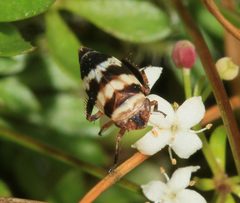
1Planaphrodes is a of leafhoppers in the Cicadellidae, Aphrodinae. The genus contains approximately 14 described distributed across the Palaearctic region from Portugal to eastern Asia. Species are morphologically defined primarily by male genitalia structure, with two phylogenetic lineages distinguished by processes. These leafhoppers exhibit considerable intraspecific variation in color pattern, particularly between sexes.
Pronunciation
How to pronounce Planaphrodes: /ˌplænəˈfroʊdiːz/
These audio files are automatically generated. While they are not always 100% accurate, they are a good starting point.
Identification
identification requires examination of male genitalia. The is supported as monophyletic based on 39 discrete male morphological characters, with two lineages defined by processes. Color pattern is unreliable for species identification due to considerable intraspecific variation.
Images
Habitat
Herbaceous plants in meadows and pastures. Some live and feed on roots beneath surface litter. Species with overlapping distributions may occupy different plant .
Distribution
Palaearctic region from Portugal to Japan. Recorded from China (including Sichuan and Hubei provinces), Korea, Japan, and parts of northern Europe (Denmark, Norway, Sweden).
Host Associations
- herbaceous plants - and feeding substrateprimary ; some feed on roots beneath surface litter
- alfalfa - feeding substrateleguminous crop association noted for tribe Aphrodini
Behavior
Cryptic lifestyle makes these leafhoppers seldom encountered in routine collecting. Low densities contribute to their rarity in collections. Males produce vibrational calling signals used in courtship. Some morphologically distinct with broadly overlapping distributions have similar courtship calls despite occupying different plant .
Similar Taxa
- Other Aphrodinae genera Aphrodinae contains multiple ; Planaphrodes distinguished by male genitalia and specific processes
More Details
Phylogenetic relationships
First -based of the supports its monophyly with two lineages defined by processes. Six recognized from China, Korea, and Japan including two species described in 2023 (P. baoxingensis and P. faciems).
Taxonomic complexity
Considerable color pattern variation and cryptic lifestyles have contributed to taxonomic challenges; several new synonymies established in recent revisions.