
Zammara
Amyot & Audinet-Serville, 1843
Species Guides
1- Zammara smaragdula(Sparse Emerald Cicada)
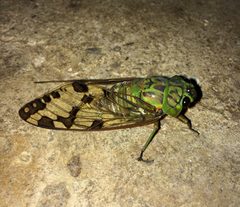
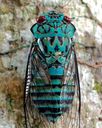
Zammara is a of large, strikingly colored cicadas in the Cicadidae. Members are distinguished by their bright blue-green coloration and divided into only two tarsomeres, a diagnostic trait separating them from related genera that possess three. The genus comprises approximately 15-16 distributed primarily in equatorial Neotropical regions. These cicadas inhabit tropical forests and produce loud, distinctive acoustic calls.
Pronunciation
How to pronounce Zammara: /zæmˈmærə/
These audio files are automatically generated. While they are not always 100% accurate, they are a good starting point.
Identification
Zammara is distinguished from other by with only two tarsomeres (tarsal segments), whereas related genera in the tribe Zammarini possess three. are generally large with bright blue-green coloration. Specific identification requires examination of morphological details such as wing venation, body markings, and male genitalia; digital illustrations in recent field guides show significant intraspecific variation in color and pattern.
Images
Habitat
Tropical forest in equatorial Neotropical regions.
Distribution
Neotropics, with concentration in equatorial regions of Central and South America. Specific range maps for individual delineate geographic distributions, with some species exhibiting strong regional differences.
Behavior
Males produce loud acoustic calls; Zammara has been described as making a "winding up-like pulsating buzz."
Human Relevance
Featured in natural history literature and field guides; Zammara smaragdula appears on the cover of The Cicadas of North America (Kratzer, 2024), serving as a notable example of Neotropical diversity.
Similar Taxa
- Other Zammarini generaDifferentiated by tarsomere count: Zammara has 2 tarsomeres, while related have 3.
More Details
Etymology
The name derives from Hebrew זַמָּר (zamár), meaning "singer," referring to the cicadas' vocalizations.
Taxonomic History
established by Amyot & Audinet-Serville in 1843. Currently includes approximately 15-16 described .