Labiobaetis
Novikova & Kluge, 1987
Species Guides
1Labiobaetis is a of small mayflies in the Baetidae, comprising over 150 described distributed across tropical and temperate regions worldwide. The genus exhibits exceptional diversity in Southeast Asia, New Guinea, and Indonesia, with significant representation also in Africa, India, and western North America. Species identification relies primarily on larval , particularly characters of the mouthparts, , and gills. are generally difficult to distinguish at the generic level.
Pronunciation
How to pronounce Labiobaetis: //ˌlæbiːoʊˈbeɪtɪs//
These audio files are automatically generated. While they are not always 100% accurate, they are a good starting point.
Identification
Distinguished from other Baetidae by the combination of: labial palp segment II with distinctive modification (thumb-like extension, concave margin, or other shape); markedly shorter than paraglossae; submarginal setae on expanded or feathered; and specific claw setation pattern. The 'catadupa' group is characterized by submarginal arc of feathered setae on labrum, thumb-like extended labial palp segment II, and specific claw and gill characters. Within the Oriental and Afrotropical regions, identification to species requires examination of mouthpart details, leg setation, and gill ; keys are available for West African and Southeast Asian species.
Images
Appearance
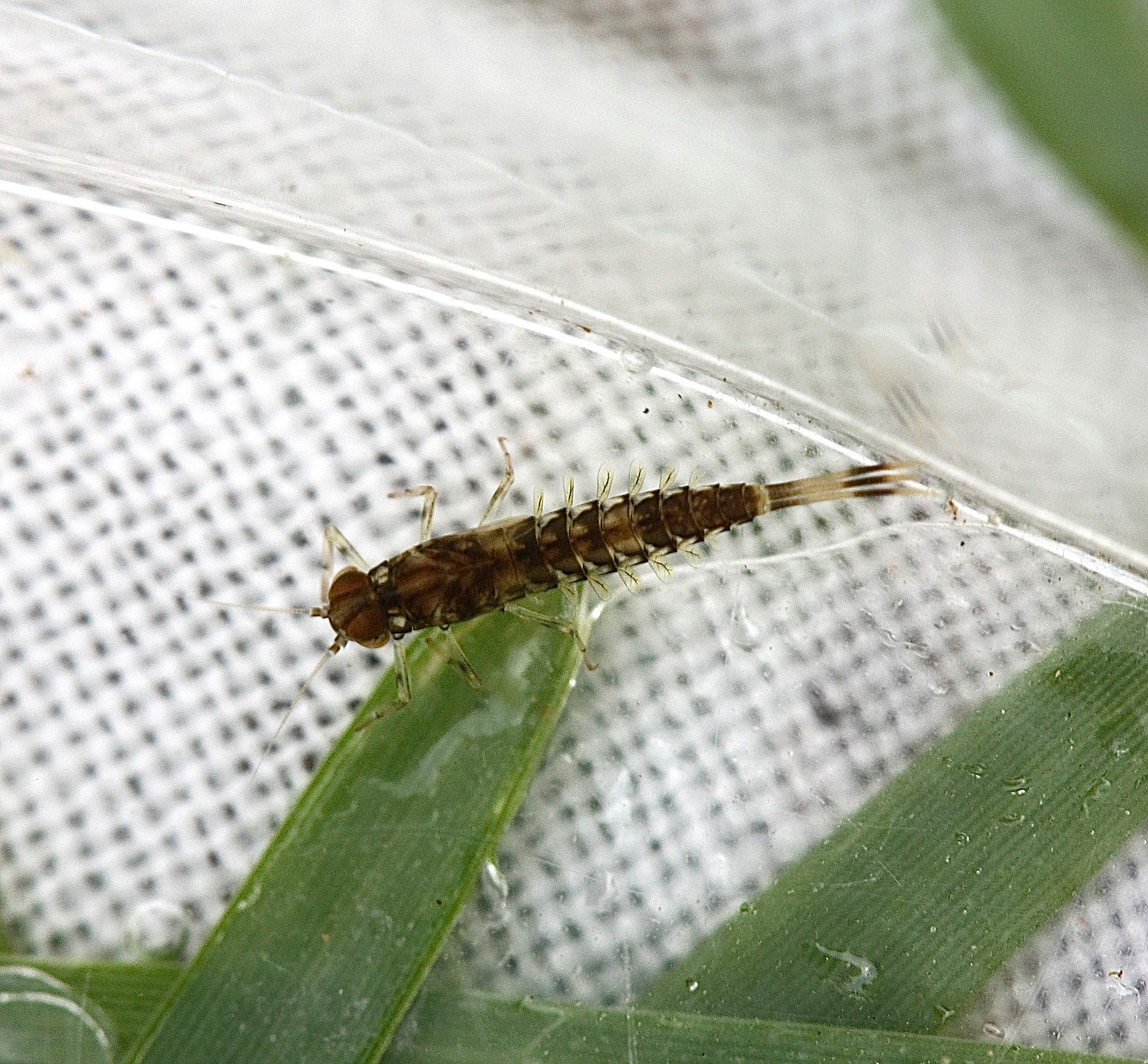
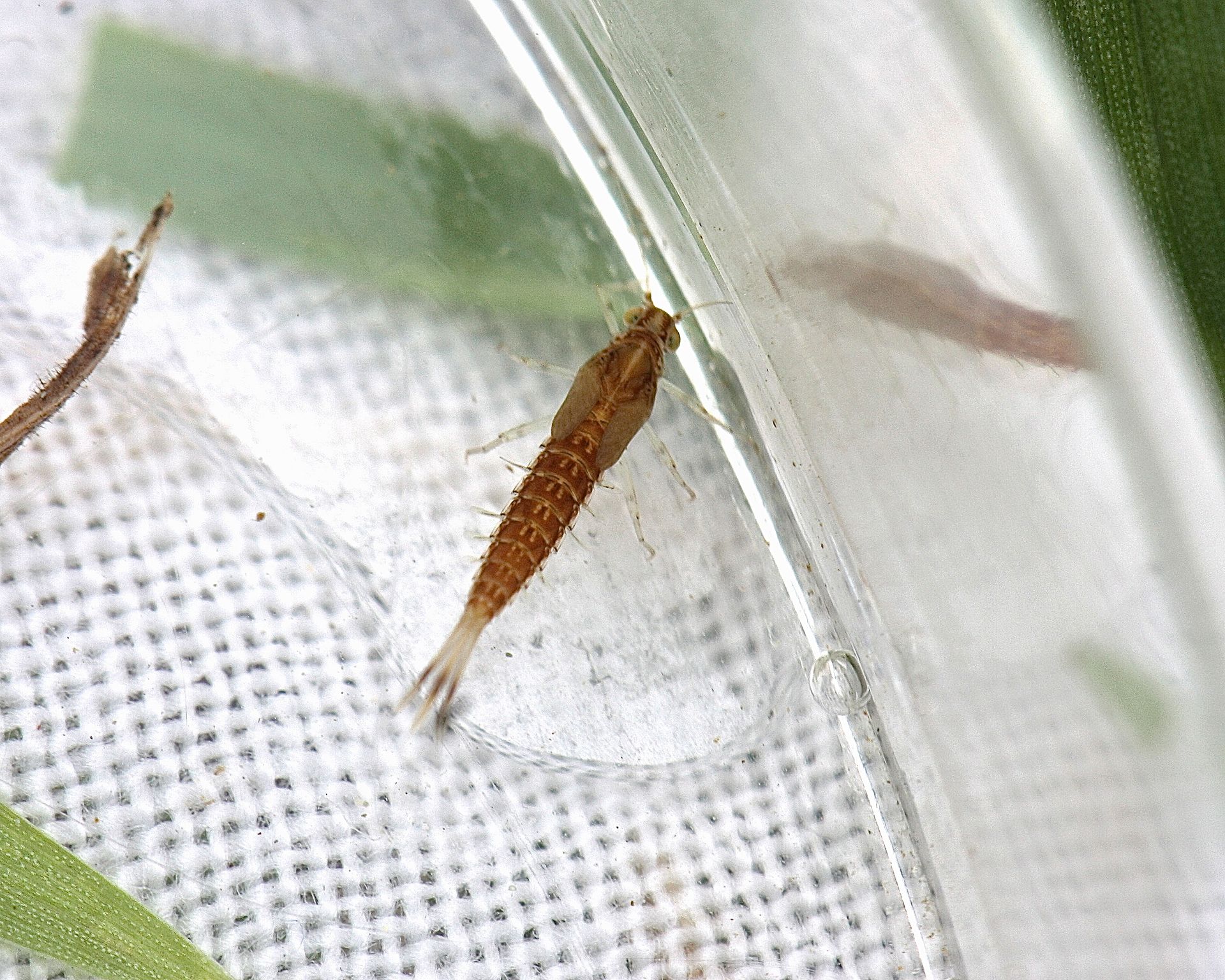
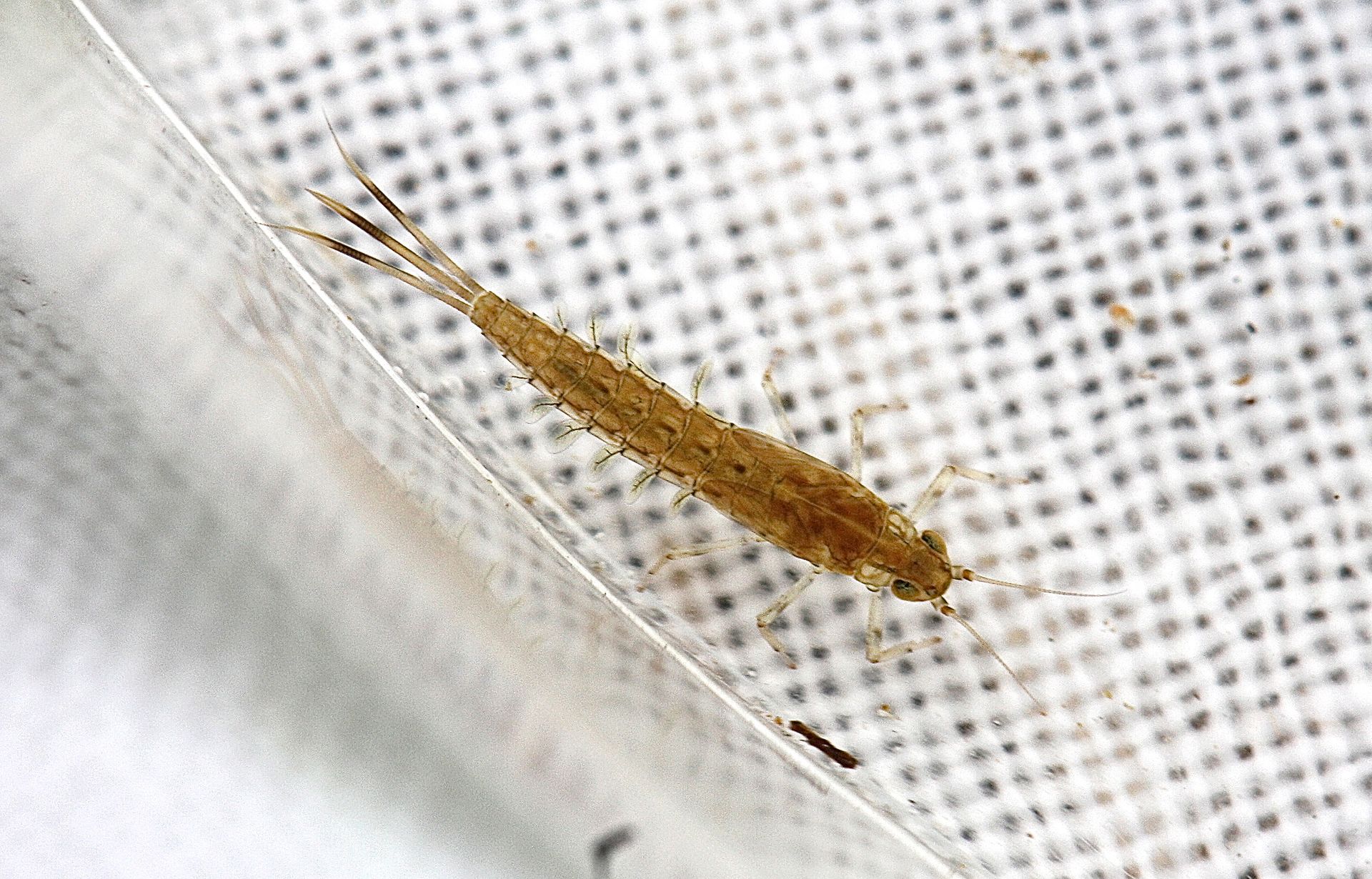
Larvae are small, typically 2.6–6.0 mm in body length, with slender bodies adapted for clinging in flowing water. Diagnostic features include: with submarginal arc of feathered or expanded setae on the surface; labial palp segment II often modified (thumb-like, concave laterally, or otherwise distinctive); much shorter than paraglossae; with variable keels between bases; claws with long subapical seta on side and reduced seta on side; six pairs of abdominal gills (gill I absent); approximately two-thirds body length with paracercus about one-fifth of cerci length. are small, approximately 5 mm, with reduced or absent hind wings in some .
Habitat
Freshwater lotic environments including streams and rivers, primarily in tropical rainforest regions. Documented from lowland to montane elevations, including sites around 100m elevation in Ulu Temburong National Park, Brunei. Specific microhabitats include river tributaries and associated stream systems with flowing water.
Distribution
Pantropical and warm temperate distribution with centers of diversity in: Southeast Asia (Thailand, Borneo, Sulawesi, Philippines); New Guinea; Indonesia; West Africa (Guinea, Mali, Ivory Coast); Ethiopia; India (Western Ghats—first record for peninsular India); and western North America (Washington, USA).
Life Cycle
Development includes , larval, and stages. Larvae are the primary described stage for most ; body length ranges 2.6–6.0 mm with approximately two-thirds body length. Adults of some species described but imaginal stage remains taxonomically difficult for generic delimitation. Specific details on egg development, timing, or mating not documented.
Ecological Role
Benthic macroinvertebrate in freshwater stream ; contributes to detritus processing and serves as prey for aquatic and terrestrial . Part of the diverse in tropical and temperate running waters.
Human Relevance
Subject of intensive taxonomic research due to high and cryptic ; used as indicator for freshwater health in some regions. No documented economic importance or pest status.
Similar Taxa
- BaetisBoth in Baetidae with similar general body plan; distinguished by Labiobaetis having modified labial palp segment II and specific labral setation.
- Other Baetidae generaLabiobaetis separated by combination of mouthpart characters including much shorter than paraglossae and distinctive claw setation pattern.
More Details
Taxonomic diversity
The has undergone extensive revision, with count increasing from approximately 100 to 153 species through recent integrative taxonomic studies combining and COI genetic sequences (2018–2021). New species continue to be described from underexplored regions.
Biogeographic significance
Distribution patterns in the Wallacea region and between Oriental and Afrotropical realms have been discussed in relation to historical and limitations.
Sources and further reading
- BugGuide
- Wikipedia
- GBIF taxonomy match
- iNaturalist taxon
- NCBI Taxonomy
- Catalogue of Life
- Labiobaetis-soldani-adult-female - Entomology Today
- Labiobaetis pulchellus Archives - Entomology Today
- New Species of Mayfly Discovered in India
- A new species of Labiobaetis Novikova & Kluge, 1987 (Ephemeroptera: Baetidae) from Washington, USA
- Labiobaetis Novikova & Kluge in West Africa (Ephemeroptera, Baetidae), with description of a new species
- New species of Labiobaetis Novikova & Kluge from Southeast Asia and New Guinea (Ephemeroptera, Baetidae)
- New species of Labiobaetis Novikova & Kluge from Thailand (Ephemeroptera, Baetidae).