
Chionea
Dalman, 1816
Snow Flies, Snow Crane Flies
Species Guides
7- Chionea albertensis(snow fly)
- Chionea alexandriana(snow fly)
- Chionea carolus
- Chionea obtusa
- Chionea scita(snow crane fly)
- Chionea stoneana(snow fly)
- Chionea valga(snow fly)
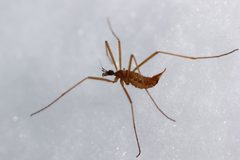
Chionea is a of wingless crane flies in the Limoniidae, commonly known as snow flies. The genus contains approximately 37-40 recognized distributed across the northern hemisphere, with two subgenera: the Holarctic Chionea and the Palearctic Sphaeconophilus. are uniquely adapted to cold environments and are active during winter months, across snow surfaces at sub-zero temperatures. The wingless condition is associated with energy conservation in freezing conditions, with muscles replaced by expanded storage capacity in females.
Pronunciation
How to pronounce Chionea: //kaɪˈoʊniə//
These audio files are automatically generated. While they are not always 100% accurate, they are a good starting point.
Identification
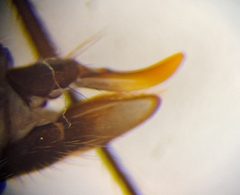
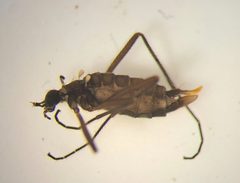
Chionea are distinguished from all other crane flies by the complete absence of wings in , a trait unique among Limoniidae. The remain present and innervated, serving as sensory organs. Adults are small, dark-colored flies with elongated legs typical of crane flies. Species-level identification requires examination of male genitalia and other subtle morphological characters; the two subgenera were historically separated by geographic distribution but recent phylogenetic work suggests this division may not reflect evolutionary relationships.
Images
Habitat
Forested environments at high elevations and latitudes; specifically associated with cold microhabitats including snow surfaces, subnivean spaces beneath snow (cavities formed by arching vegetation and leaf litter), small caves, and rodent burrows. Stone runs and stony accumulations in lower mountain ranges provide critical cold refugia for some .
Distribution
Northern hemisphere with Holarctic distribution. North American concentrated in western mountain ranges and glaciated eastern forests; sixteen species occur in North America. Palearctic species distributed across Europe from Scandinavia to the Mediterranean, extending east through Russia to Japan. Some species occur at elevations exceeding 3400 m in the Rocky Mountains.
Seasonality
active exclusively during winter months, with peak activity in October-November and February-March. Activity occurs at air temperatures from 0°C down to at least -6°C in the wild, with laboratory survival to mean lows of -7°C and some individuals active at -17°C. Adults may live up to two months, significantly longer than typical crane flies.
Life Cycle
Complete with four stages. Females carry up to 200 , which are laid singly. Eggs hatch in 8 days to 3 weeks under laboratory conditions. Larval development occurs during summer months in wooded regions, small caves, and rodent burrows; occurs in fall. Larval diet likely consists of decomposing organic debris including decaying leaves, grass stems, and rodent , though this remains incompletely documented and laboratory rearing has consistently failed.
Behavior
walk continuously across snow surfaces at speeds up to 0.8 meters per minute, often at near-maximum velocity. Males leap when alarmed. Adults actively seek cold microhabitats and obtain water by pressing the against snow. Mating is indiscriminate and protracted (30-70 minutes), occurring tail-to-tail; the difficulty of locating mates in sparse likely drives this strategy. Adults demonstrate , instantly self-amputating legs upon sensing frostbite to prevent freezing from spreading.
Ecological Role
serve as winter-active prey for specialized cold-adapted including rock-crawlers (Grylloblattidae) and rodents. Larvae function as decomposers in subnivean and cave . The serves as intermediate for tapeworms (genus Hymenolepis), with cysticercoid stages found in adult flies indicating consumption by rodent definitive hosts. Phoretic (similar to Rhabditis) use adults for via dauer capsules attached around the neck.
Human Relevance
do not bite or sting and pose no direct threat to humans. Occasionally encountered by winter hikers and naturalists on snow surfaces in forested mountains. Serve as indicators of cold, undisturbed forest and refugial .
Similar Taxa
- TipulaWinged crane flies in the Tipulidae share general body plan and leg proportions but possess fully developed wings and are active in warmer seasons.
- TrichoceraWinter crane flies in the Trichoceridae are active in cold conditions but retain wings and have distinct wing venation and body proportions.
- GrylloblattaRock-crawlers (Grylloblattidae) share snow surface and cold but are flattened, wingless insects with chewing mouthparts and forelegs, not flies.
Sources and further reading
- BugGuide
- Wikipedia
- GBIF taxonomy match
- iNaturalist taxon
- NCBI Taxonomy
- Catalogue of Life
- Bug Eric: Fly Day Friday: Snow Flies
- Bug Eric: OrThoptera Thursday: Northern Green-striped Grasshopper
- Melanospora chionea . [Descriptions of Fungi and Bacteria].
- Studies on the distribution and ecology of snow fliesChionea lutescensandChionea alpina(Diptera, Limoniidae) in Italy
- How cold‐adapted flightless flies dispersed over the northern hemisphere: phylogeny and biogeography of the snow fly genus Chionea D alman ( D iptera: L imoniidae)
- Ice cage: new records and cryptic, isolated lineages in wingless snow flies (Diptera, Limoniidae: Chionea spp.) in German lower mountain ranges
- Comparative Mitogenomic Analysis of Three Chionea Species (Tipulomorpha: Limoniidae): Insights into Phylogenetic Relationships and Selection Pressure.