
Myrmecothea
Hendel, 1910
Species Guides
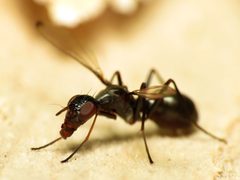
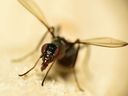
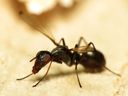
1Myrmecothea is a of picture-winged flies in the Ulidiidae, established by Hendel in 1910. The genus contains a single described , Myrmecothea myrmecoides (Loew, 1860). These flies are recognized for their distinctive wing patterns and -mimicking appearance. Records indicate limited but documented observations across their known range.
Pronunciation
How to pronounce Myrmecothea: //mɪrˈmɛkoʊˌθiːə//
These audio files are automatically generated. While they are not always 100% accurate, they are a good starting point.
Identification
Members of Myrmecothea can be distinguished from other ulidiid by their -like body form and characteristic wing patterning typical of picture-winged flies. The single Myrmecothea myrmecoides specifically mimics ants in its overall gestalt, a trait reflected in its specific epithet. Accurate identification to genus requires examination of wing venation and body proportions relative to other Ulidiidae.
Images
Distribution
Documented observations exist from Europe and parts of Asia, with records concentrated in regions where the type has been collected. The precise geographic extent remains incompletely documented due to limited sampling.
Behavior
The epithet 'myrmecoides' and common references suggest -mimicking , though specific behavioral mimicry of ants has not been independently verified in published sources.
Similar Taxa
- Other Ulidiidae generaMyrmecothea shares the -defining patterned wings with all Ulidiidae, but differs in its more pronounced -like body shape compared to most other in the family.
- Formicidae (ants)The -mimicking appearance of Myrmecothea myrmecoides may cause superficial confusion with actual ants, but flies possess single pair of wings, , and typical dipteran structure with large .
More Details
Taxonomic status
Myrmecothea is a , containing only Myrmecothea myrmecoides. The genus was established by Hendel in 1910, with the originally described by Loew in 1860 under a different genus.
Observation records
iNaturalist documents 72 observations attributed to this , indicating it is occasionally encountered but not frequently recorded by naturalists.