
Earomyia
Zetterstedt, 1842
Species Guides
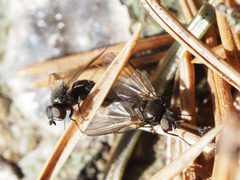
1Earomyia is a of small flies in the Lonchaeidae (Diptera). in this genus have been documented developing within the stems of toxic plants in the Melanthiaceae family, including Veratrum album and Toxicoscordion venenosum. At least one species, E. crystallophila, occupies decaying stem tissue solitarily. The genus is distributed across Europe and North America, with records from Scandinavia, Serbia, and the western United States.
Pronunciation
How to pronounce Earomyia: /ˌɪərəˈmaɪə/
These audio files are automatically generated. While they are not always 100% accurate, they are a good starting point.
Images
Habitat
Mountainous regions; specifically associated with stems of toxic Melanthiaceae plants. E. crystallophila has been found at 988 m elevation inside blackened, decaying stem tissue of Veratrum album, approximately one-third of the distance from the stem apex.
Distribution
Europe: Denmark, Norway, Sweden, Serbia (Crni Vrh). North America: Montana, U.S.A.
Seasonality
Larvae of E. crystallophila collected in July; observed in January under laboratory conditions.
Host Associations
- Veratrum album L. - larval development siteBlackened decaying stem tissue
- Toxicoscordion venenosum (S. Watson) Rydb. - associated plantToxic Melanthiaceae; specific interaction type not detailed
Life Cycle
Larval development occurs within plant stems. takes place inside the tissue. E. crystallophila: larvae present in July, emerge following pupal (laboratory in January suggests winter diapause or extended development period).
Behavior
E. crystallophila larvae occupy stem tissue solitarily; no other insects were found in the same decaying stem sections.
More Details
Taxonomic note
Earomyia is the type of the tribe Earomyiini within Lonchaeinae.
Research gaps
Larval and puparial has been described for E. crystallophila, but most lack detailed stage documentation. associations are known for only a few species.
Sources and further reading
- BugGuide
- GBIF taxonomy match
- iNaturalist taxon
- NCBI Taxonomy
- Catalogue of Life
- Biology and immature stages of a lonchaeid fly, Earomyia crystallophila (Becker, 1895) (Diptera, Lochaeidae), developing in stems of Veratrum album L.
- A new species of Earomyia Zetterstedt, 1842 (Diptera; Lonchaeidae) from Montana, U.S.A., associated with the toxic plant Toxicoscordion venenosum (S. Watson) Rydb. (Melanthiaceae)