
Leucotabanus
Lutz, 1913
White Horse Flies
Species Guides
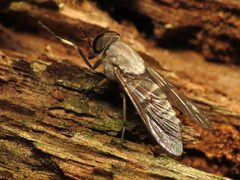
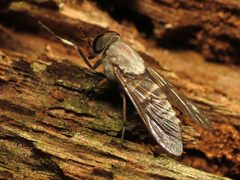
2Leucotabanus is a of horse flies ( Tabanidae) established by Lutz in 1913. The genus comprises approximately 16 described distributed primarily in the Neotropical region, with particular diversity in the Amazon basin. Members are commonly referred to as White Horse Flies. Species-level has been revised in recent decades, with several species described by Fairchild in the mid-20th century and a new species, L. fairchildi, described in 2019.
Pronunciation
How to pronounce Leucotabanus: //luːkoʊˈtæbənəs//
These audio files are automatically generated. While they are not always 100% accurate, they are a good starting point.
Identification
Leucotabanus can be distinguished from other tabanid using morphological characters detailed in taxonomic keys. The 2019 revision provides a diagnostic key for seven Amazonian species (L. albovarius, L. exaestuans, L. flavinotum, L. janinae, L. pauculus, L. weyrauchi, and L. fairchildi) based on external . The male of L. weyrauchi was described for the first time in this revision, indicating prior identification challenges for this sex in some species.
Images
Habitat
Amazon region forest environments. Specimens have been collected in the forest , with at least one record of attraction to light in this .
Distribution
Neotropical region, with concentration in the Amazon basin of Brazil. Seven have confirmed records from the Amazon region. Two non-Amazonian species (L. canithorax and L. sebastianus) have been documented with expanded distribution records for the latter.
Behavior
have been observed attracted to light in forest settings.
More Details
Species Diversity
The contains at least 16 described , though the iNaturalist entry notes at least 2 described species, suggesting potential taxonomic uncertainty or incomplete indexing.
Taxonomic History
Multiple were described by Fairchild between 1941 and 1985, indicating a mid-20th century expansion of known diversity. The most recent species description is L. fairchildi (2019) from the Amazon region.