
Heteromeringia
Czerny, 1903
Species Guides
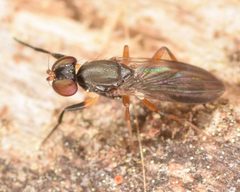
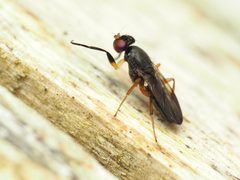
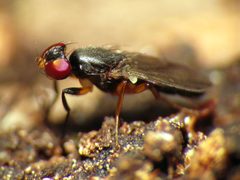
1Heteromeringia is a of small flies in the Clusiidae, established by Czerny in 1903. The genus contains over 70 described distributed across the New World and Afrotropical regions. A 2007 revision documented 18 New World species and described 10 new species, establishing two species groups: the H. nitida group (Nearctic/Neotropical) and the entirely neotropical H. czernyi group. Males of H. nitida exhibit territorial , using bicoloured forelegs to defend mating territories.
Pronunciation
How to pronounce Heteromeringia: //ˌhɛtɛroʊməˈrɪndʒiə//
These audio files are automatically generated. While they are not always 100% accurate, they are a good starting point.
Identification
Members of Heteromeringia can be distinguished from related by features established in taxonomic revisions. The genus is divided into two groups: the H. nitida group and the H. czernyi group. H. nitida males possess bicoloured forelegs used in territorial defense, a trait not previously documented in the genus. A key to New World species was published by Lonsdale & Marshall (2007).
Images
Distribution
New World (Mexico, Brazil, Rica, Ecuador, Peru) and Afrotropical regions. The H. nitida group occurs in Nearctic and Neotropical zones, while the H. czernyi species group is restricted to the Neotropics. Additional records from Scandinavia (Denmark, Norway, Sweden) appear in GBIF data.
Behavior
Males of H. nitida have been observed defending mating territories through agonistic interactions, using their bicoloured forelegs. This represents the first documented aggressive within the .
Similar Taxa
- SobarocephalaFormerly confused with Heteromeringia; H. dimidiata was transferred to Sobarocephala, and S. subfasciata was synonymized with H. czernyi, indicating historical taxonomic overlap requiring careful distinction.
More Details
Taxonomic revision
The 2007 revision by Lonsdale & Marshall in Contributions to Entomology established the modern classification of New World , described 10 new species, and resolved nomenclatural issues including replacement names and synonymies.
Species diversity
Over 70 are currently recognized in the , with 18 species documented in the New World revision.