
Rhinophoridae
Woodlouse Flies
Genus Guides
3- Bezzimyia
- Melanophora(woodlouse flies)
- Stevenia
is a small of calyptrate flies (Diptera) comprising 33 and approximately 177 . The family is distinguished by a highly specialized : larvae are obligate of terrestrial isopods (woodlice), a feeding strategy unique among all insects. lack morphological autapomorphies and are difficult to identify without examination of male terminalia or first-instar larvae. The group was historically considered primarily Palaearctic in distribution, but recent sampling has revealed substantial diversity in tropical and southern hemisphere regions.
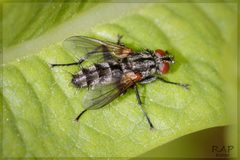
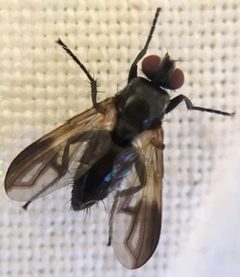
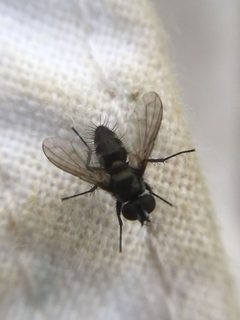
Pronunciation
How to pronounce Rhinophoridae: //raɪˌnɒfəˈrɪdiː//
These audio files are automatically generated. While they are not always 100% accurate, they are a good starting point.
Identification
lack unique diagnostic characters and cannot be reliably distinguished from related oestroid by general habitus alone. Definitive identification requires examination of male terminalia or, for family-level affiliation, first-instar larvae which possess unambiguous synapomorphies. Wing venation and general body form resemble other Tachinoidea, contributing to historical taxonomic confusion with Tachinidae.
Images
Habitat
Associated with terrestrial isopod () in diverse environments; peak documented diversity occurs in the Turano-Mediterranean region of the western Palaearctic. Specific microhabitat preferences of remain poorly characterized.
Distribution
excluding Australasia and Oceania; historically concentrated in Palaearctic and Afrotropical regions with substantial recent discoveries in tropical and southern hemisphere subtropical areas. Documented from Holarctic, Neotropical, and Oriental regions including Japan, Ecuador, Mauritius, Trinidad and Tobago, Peru, and Malaysia.
Host Associations
Life Cycle
Females deposit near potential ; planidial first-instar larvae actively seek and parasitize passing woodlice. Larval development occurs entirely within the host, with third instar larvae eventually killing the . Multiple larval have been observed within single host .
Behavior
Parasitized woodlice exhibit characteristic behavioral changes including substrate-clinging, discharge of secretions from uropod glands, empty gut condition, and visible calcium plates through the .
Ecological Role
Specialized of soil-dwelling macroarthropods, specifically terrestrial isopods; -level impacts on remain unstudied.
Similar Taxa
- Tachinidae and wing venation overlap substantially; historical misclassification of (e.g., Aporeomyia) between occurred due to superficial similarity
- OestridaeShared oestroid features including calyptrate wing base and general body plan; distinguished by larval and first-instar
Sources and further reading
- BugGuide
- GBIF taxonomy match
- iNaturalist taxon
- NCBI Taxonomy
- The world woodlouse flies (Diptera, Rhinophoridae)
- Revision of the Rhinophoridae (Diptera: Calyptratae) of Japan
- Figure 3 from: Wood CT, Nihei SS, Araujo PB (2018) Woodlice and their parasitoid flies: revision of Isopoda (Crustacea, Oniscidea) – Rhinophoridae (Insecta, Diptera) interaction and first record of a parasitized Neotropical woodlouse species. In: Hornung E, Taiti S, Szlávecz K (Eds) Terrestrial Isopods in a changing World. ZooKeys 801: 401-414. https://doi.org/10.3897/zookeys.801.26052
- Supplementary material 2 from: Wood CT, Nihei SS, Araujo PB (2018) Woodlice and their parasitoid flies: revision of Isopoda (Crustacea, Oniscidea) – Rhinophoridae (Insecta, Diptera) interaction and first record of a parasitized Neotropical woodlouse species. In: Hornung E, Taiti S, Szlávecz K (Eds) Terrestrial Isopods in a changing World. ZooKeys 801: 401-414. https://doi.org/10.3897/zookeys.801.26052
- First North American record of the Palaearctic rhinophorid Stevenia deceptoria (Loew) (Diptera: Rhinophoridae)
- Supplementary material 1 from: Wood CT, Nihei SS, Araujo PB (2018) Woodlice and their parasitoid flies: revision of Isopoda (Crustacea, Oniscidea) – Rhinophoridae (Insecta, Diptera) interaction and first record of a parasitized Neotropical woodlouse species. In: Hornung E, Taiti S, Szlávecz K (Eds) Terrestrial Isopods in a changing World. ZooKeys 801: 401-414. https://doi.org/10.3897/zookeys.801.26052
- Figure 1 from: Wood CT, Nihei SS, Araujo PB (2018) Woodlice and their parasitoid flies: revision of Isopoda (Crustacea, Oniscidea) – Rhinophoridae (Insecta, Diptera) interaction and first record of a parasitized Neotropical woodlouse species. In: Hornung E, Taiti S, Szlávecz K (Eds) Terrestrial Isopods in a changing World. ZooKeys 801: 401-414. https://doi.org/10.3897/zookeys.801.26052