
Hypoderma lineatum
(Villers, 1789)
Common Cattle Grub, Ox Warble Fly
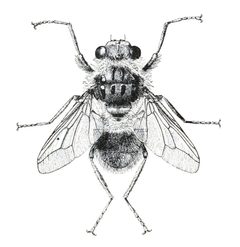
Hypoderma lineatum is a parasitic in the Oestridae, commonly known as the common . emerge from in early May, approximately one month before the related H. bovis. Females oviposit on cattle during sunny, calm weather from late May through early September, showing a preference for open areas and avoiding water and shade. First-instar larvae penetrate the 's skin and migrate to the gullet, where they develop for an average of 42.5 days before moving to subcutaneous tissues of the back. The causes significant economic damage to cattle through hide degradation, reduced milk yield, and irritation during adult oviposition activity. Unlike H. bovis, H. lineatum does not terrify cattle during oviposition; animals typically show little uneasiness.
Pronunciation
How to pronounce Hypoderma lineatum: //haɪpoʊˈdɜːrmə lɪˈniːətəm//
These audio files are automatically generated. While they are not always 100% accurate, they are a good starting point.
Identification
are large, robust flies resembling bees or bumblebees. H. lineatum can be distinguished from H. bovis by its earlier seasonal activity ( in early May versus June) and less disturbing effect on cattle during oviposition. Larvae in the final instar are found in subcutaneous tissues of the back, creating characteristic warbles or lumps. The shows distinct topographical patterns of , with lower intensity on upland pastures compared to lowland farms.
Images
Habitat
Associated with cattle in agricultural and pastoral settings. prefer open, sunny areas for oviposition and tend to avoid the vicinity of water and shade. Upland pastures generally experience lower rates than lowland farms.
Distribution
Northern Hemisphere, including Britain (particularly South Wales), Europe, North America, and parts of Asia. Distribution records include Japan, Norway, Sweden (irregular), and Hawaii.
Seasonality
emerge from in early May. Oviposition period extends from late May to early September during sunny, calm weather. Larvae spend approximately 42.5 days in subcutaneous tissues before departing to pupate.
Host Associations
- cattle - primary Larvae develop in subcutaneous tissues; oviposit on legs and flanks
- Shorthorn heifer - documented Recorded case with 152 larvae on single animal
Life Cycle
are deposited on cattle during sunny conditions. First-instar larvae penetrate the skin and migrate to the gullet, possibly selecting this site for freer oxygen supply and loose areolar tissue. Larvae assume a horizontal position under the hide, minimizing effects of skin movement. After developing in the gullet region, larvae move to subcutaneous tissues of the back where they spend an average of 42.5 days. Larvae depart to pupate earlier than previously assumed in some regions—over 20% pupating before March 28th in South Wales studies versus 1.4% in Worcestershire. occurs in soil.
Behavior
persistently attempt to oviposit on cattle during suitable weather conditions. Unlike H. bovis, H. lineatum does not cause terror in cattle; animals show little uneasiness during oviposition. Adults avoid water and shade, concentrating activity in open, sunny areas.
Ecological Role
Significant economic pest of cattle. Over 80% of surveyed cattle harbored of varying intensity. Causes hide damage, reduced milk yield, and irritation. Infestation intensity correlates with topographical conditions and host age, with cattle under three years carrying heavier infestations than older animals under identical conditions.
Human Relevance
Major veterinary pest causing substantial economic losses in cattle production through hide degradation and milk yield reduction. Subject to extensive control research including trials. emulsion sprays applied to legs and flanks during oviposition period showed promise, though DDT and benzene hexachloride proved ineffective against final instar larvae. Potential for integrated management strategies including sterile male-release technique.
Similar Taxa
- Hypoderma bovisCo-occurring ; distinguished by later (June versus May), greater disturbance to cattle during oviposition, and different seasonal activity patterns. H. bovis inspires terror in cattle while H. lineatum does not.
Sources and further reading
- BugGuide
- GBIF taxonomy match
- iNaturalist taxon
- NCBI Taxonomy
- Cerambycidae | Beetles In The Bush | Page 8
- Surviving winter, Part IV: A Monarch Christmas in Monterey, Danaus plexippus — Bug of the Week
- Catching up with the Monarch butterfly, Danaus plexippus — Bug of the Week
- Monarchs and Mojitos: Monarch butterfly, Danaus plexippus — Bug of the Week
- Wednesday “What the heck?” | Beetles In The Bush
- Studies on the Ox Warble Flies,Hypoderma lineatumandHypoderma bovis
- Common Cattle Grub, Hypoderma lineatum (Villers) (Insecta: Diptera: Oestridae)
- Warble Flies. A Further Contribution on the Biology of Hypoderma lineatum and Hypoderma bovis
- DISTRIBUTION OF CHOLINESTERASE IN THE LARVAE OF HYPODERMA BOVIS AND HYPODERMA LINEATUM (DIPTERA: OESTRIDAE) AND ITS INHIBITION BY SYSTEMIC INSECTICIDES
- Survival of First-Instar Larvae of Hypoderma Lineatum (Diptera: Oestridae) Implanted in Heterologous Murine Hosts1