
Hoplocheiloma totliana
(Gmelin, 1790)
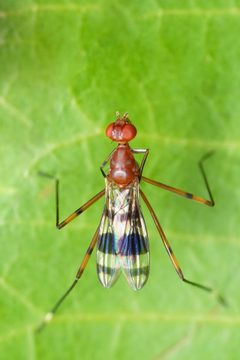
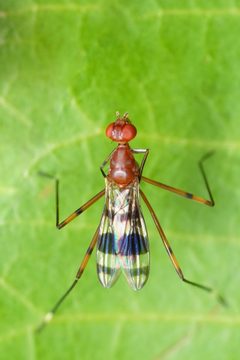
Hoplocheiloma totliana is a of stilt-legged fly in the Micropezidae. The species was originally described by Gmelin in 1790 under the basionym Musca totliana. Members of this are characterized by their elongated legs and distinctive body proportions. Limited published information exists regarding the specific of this species.

Pronunciation
How to pronounce Hoplocheiloma totliana: //ˌhɒploʊˌkaɪˈloʊmə ˌtɒtliˈænə//
These audio files are automatically generated. While they are not always 100% accurate, they are a good starting point.
Identification
Distinguished from other Micropezidae by genitalic characters and specific leg proportions. Separation from congeneric requires examination of male terminalia. The combination of -level traits (elongate legs, reduced wing venation, small ) with species-specific structural features permits identification. Similar stilt-legged flies in such as Neriidae have different wing venation patterns.
Images
Appearance
As a member of Micropezidae, possesses characteristically elongated, slender legs with the hind pair often longest. Body typically small to medium-sized with a narrow, elongate profile. Wing venation reduced compared to other dipteran . small relative to body with large . Coloration patterns not well documented in published literature.
Distribution
Specific geographic range not well documented in accessible literature. The Hoplocheiloma has tropical and subtropical distribution patterns.
Behavior
Stilt-legged flies in this are known for characteristic waving movements of the forelegs, though this specific has not been confirmed for H. totliana specifically.
Similar Taxa
- Micropezidae (family members)Share elongate leg and reduced wing venation; -level distinction requires detailed morphological examination
- NeriidaeSimilar stilt-legged appearance but differ in wing venation and antennal structure
More Details
Taxonomic history
Originally described as Musca totliana by Gmelin in 1790, later transferred to Hoplocheiloma. The etymology of the specific epithet 'totliana' remains unclear in published sources.