
Helina evecta
(Harris, 1780)
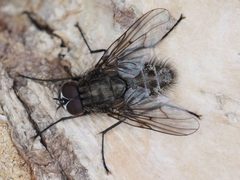
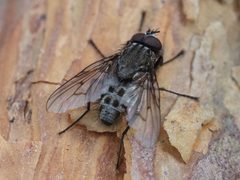
Helina evecta is a muscid fly described by Harris in 1780. are associated with flowering plants in spring, particularly willows (Salix) and coltsfoot (Tussilago). The has a broad distribution spanning Europe, Asia, North Africa, and parts of South America.
Pronunciation
How to pronounce Helina evecta: /hɛˈlɪna ɛˈvɛkta/
These audio files are automatically generated. While they are not always 100% accurate, they are a good starting point.
Images
Habitat
Larval consists of humus soil and moss. habitat includes flowering vegetation in spring.
Distribution
Most of Europe, extending eastward through Asia to India. Also recorded from North Africa and northern South America. Documented presence in Belgium (including Flemish Region), Denmark, Norway, and Madeira Island (Portugal).
Seasonality
activity occurs in spring, associated with flowering of Salix and Tussilago.
Diet
have been observed feeding on Salix and Tussilago flowers.
Life Cycle
Larvae develop in humus soil and moss.