
Hylemya alcathoe
(Walker, 1849)
Hylemya alcathoe is a of root-maggot fly in the Anthomyiidae. It is one of many anthomyiid species whose larvae develop in plant roots or stems. Male reproductive has been specifically studied in this species. The species was described by Walker in 1849 and is currently accepted in taxonomic databases.
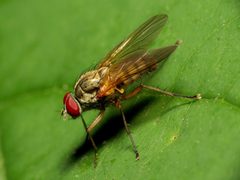
Pronunciation
How to pronounce Hylemya alcathoe: /haɪleɪˌmiːə ælˈkæθoʊ/
These audio files are automatically generated. While they are not always 100% accurate, they are a good starting point.
Identification
As a member of the Anthomyiidae, Hylemya alcathoe likely resembles other small to medium-sized muscoid flies with dull grayish or brownish coloration. Specific diagnostic features distinguishing this from and other anthomyiids are not documented in available sources. Accurate identification to species level typically requires examination of male genitalia and other microscopic characters.
Images
Behavior
Male reproductive has been studied and involves specific mating interactions typical of anthomyiid flies. The details of these interactions are documented in a dedicated behavioral study.
Similar Taxa
- Other Anthomyiidae speciesRoot-maggot flies in this share general morphological similarities and require detailed examination for -level identification. Hylemya alcathoe is distinguished by specific genitalic and other microscopic characters not visible in field observations.
More Details
Research focus
This has been the subject of a specific study on male reproductive published in American Midland Naturalist, indicating it has served as a model for understanding mating behavior in anthomyiid flies. The full study would contain detailed behavioral observations not captured in the abstract.