
Scatella
Robineau-Desvoidy, 1830
shore flies
Species Guides
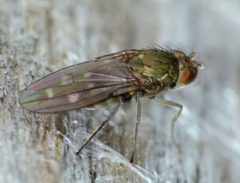
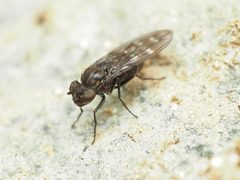
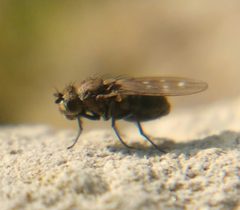
6Scatella is a large of shore flies in the Ephydridae, with at least 140 described worldwide. Species are primarily aquatic or semi-aquatic, associated with streams, seeps, and other moist . Some species have adapted to artificial environments including greenhouses, where they can develop in substrates such as rockwool. The genus has notable diversity in the Pacific basin, including 17 species in the Hawaiian Islands with 15 endemics.
Pronunciation
How to pronounce Scatella: //skəˈtɛlə//
These audio files are automatically generated. While they are not always 100% accurate, they are a good starting point.
Images
Habitat
Aquatic and semi-aquatic environments including streams, seeps, and vegetation in moist . Some occupy artificial substrates such as rockwool in greenhouse systems. The Ephydridae includes species adapted to extreme environments including high elevations, sulfurous hot springs, highly alkaline or saline lakes, and petroleum pools, though specific Scatella adaptations to these habitats are not documented.
Distribution
Worldwide distribution with strong representation in the Pacific basin. Documented from Hawaii, French Polynesia, Western Samoa, Australia, New Zealand, and Easter Island. In the Hawaiian Islands, recorded from Kauai, Oahu, Molokai, Lanai, Maui, and Hawaii. Also present in China, with additional records from Denmark, Norway, Sweden, and Vermont, USA.
Diet
Larvae of at least some feed on and organic matter in moist substrates. Specific diet for most species is not documented.
Life Cycle
Complete with , larval, pupal, and stages. Development time from egg to adult in Scatella stagnalis is temperature-dependent: approximately 16 days at 20°C, 11 days at 25°C, and 10 days at fluctuating temperatures averaging 28.5°C. Lower developmental threshold is approximately 6.4°C. Whether this pattern applies to other in the is unknown.
Ecological Role
Some are nuisance pests in greenhouse . At the level, ephydrids provide food for wildlife including migratory birds, and some species are agricultural pests of watercress, rice, barley, and other irrigated cereals. Specific ecological roles for most Scatella species are not documented.
Human Relevance
Scatella stagnalis and potentially other are nuisance pests in greenhouse environments, developing in artificial growing media such as rockwool and potentially interfering with crop production systems.
More Details
Species diversity
The contains at least 140 described globally, with 17 species in the Hawaiian Islands including 15 endemics.
Population dynamics
In Scatella stagnalis at 25°C, females produce approximately 315 over a lifespan of about 15 days, with a doubling time of 5.3 days under laboratory conditions.
Sources and further reading
- BugGuide
- Wikipedia
- GBIF taxonomy match
- iNaturalist taxon
- NCBI Taxonomy
- Catalogue of Life
- Review of the subgenus Scatella Robineau-Desvoidy, 1830 from China (Diptera: Ephydridae)
- Studies in Hawaiian Diptera II: New Distributional Records for Endemic Scatella (Ephydridae)
- Biology of the shore fly Scatella stagnalis in rockwool under greenhouse conditions
- Supplementary material 7 from: O'Grady P, Arakaki K, Evenhuis N (2014) Studies in Hawaiian Diptera II: New Distributional Records for Endemic Scatella (Ephydridae). Biodiversity Data Journal 2: e1110. https://doi.org/10.3897/BDJ.2.e1110
- Supplementary material 3 from: O'Grady P, Arakaki K, Evenhuis N (2014) Studies in Hawaiian Diptera II: New Distributional Records for Endemic Scatella (Ephydridae). Biodiversity Data Journal 2: e1110. https://doi.org/10.3897/BDJ.2.e1110
- Supplementary material 13 from: O'Grady P, Arakaki K, Evenhuis N (2014) Studies in Hawaiian Diptera II: New Distributional Records for Endemic Scatella (Ephydridae). Biodiversity Data Journal 2: e1110. https://doi.org/10.3897/BDJ.2.e1110
- Supplementary material 15 from: O'Grady P, Arakaki K, Evenhuis N (2014) Studies in Hawaiian Diptera II: New Distributional Records for Endemic Scatella (Ephydridae). Biodiversity Data Journal 2: e1110. https://doi.org/10.3897/BDJ.2.e1110
- Supplementary material 1 from: O'Grady P, Arakaki K, Evenhuis N (2014) Studies in Hawaiian Diptera II: New Distributional Records for Endemic Scatella (Ephydridae). Biodiversity Data Journal 2: e1110. https://doi.org/10.3897/BDJ.2.e1110
- Supplementary material 14 from: O'Grady P, Arakaki K, Evenhuis N (2014) Studies in Hawaiian Diptera II: New Distributional Records for Endemic Scatella (Ephydridae). Biodiversity Data Journal 2: e1110. https://doi.org/10.3897/BDJ.2.e1110
- Supplementary material 10 from: O'Grady P, Arakaki K, Evenhuis N (2014) Studies in Hawaiian Diptera II: New Distributional Records for Endemic Scatella (Ephydridae). Biodiversity Data Journal 2: e1110. https://doi.org/10.3897/BDJ.2.e1110
- Supplementary material 2 from: O'Grady P, Arakaki K, Evenhuis N (2014) Studies in Hawaiian Diptera II: New Distributional Records for Endemic Scatella (Ephydridae). Biodiversity Data Journal 2: e1110. https://doi.org/10.3897/BDJ.2.e1110
- Supplementary material 12 from: O'Grady P, Arakaki K, Evenhuis N (2014) Studies in Hawaiian Diptera II: New Distributional Records for Endemic Scatella (Ephydridae). Biodiversity Data Journal 2: e1110. https://doi.org/10.3897/BDJ.2.e1110
- Supplementary material 4 from: O'Grady P, Arakaki K, Evenhuis N (2014) Studies in Hawaiian Diptera II: New Distributional Records for Endemic Scatella (Ephydridae). Biodiversity Data Journal 2: e1110. https://doi.org/10.3897/BDJ.2.e1110
- Supplementary material 5 from: O'Grady P, Arakaki K, Evenhuis N (2014) Studies in Hawaiian Diptera II: New Distributional Records for Endemic Scatella (Ephydridae). Biodiversity Data Journal 2: e1110. https://doi.org/10.3897/BDJ.2.e1110
- Supplementary material 9 from: O'Grady P, Arakaki K, Evenhuis N (2014) Studies in Hawaiian Diptera II: New Distributional Records for Endemic Scatella (Ephydridae). Biodiversity Data Journal 2: e1110. https://doi.org/10.3897/BDJ.2.e1110