
Drosophila repleta
Wollaston, 1858
vinegar fly
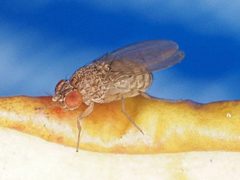
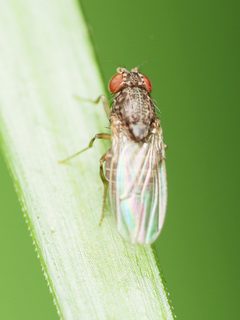
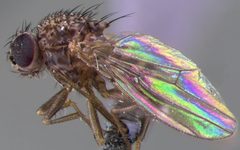
Drosophila repleta is a subtropical in the Drosophilidae. The is well adapted to warm, urbanized environments and has been documented as a carrier of foodborne including Escherichia coli O157:H7, Salmonella Saint Paul, and Listeria innocua. It belongs to the repleta species group, a radiation of cactophilic flies that have been studied as a model for plant shifts and olfactory system evolution. Research on D. repleta has focused on its olfactory variation and its role in comparative studies of chemical across related species.
Pronunciation
How to pronounce Drosophila repleta: /droˈsɒfɪlə rɪˈpliːtə/
These audio files are automatically generated. While they are not always 100% accurate, they are a good starting point.
Images
Habitat
Warm, urbanized environments; subtropical regions. As a member of the repleta group, it is associated with cactus , though specific host plant associations for D. repleta itself are not well documented in available sources.
Distribution
Subtropical regions; recorded from Santa Catalina Island, California; distribution records from the Azores (Faial, Flores, Pico, São Jorge, São Miguel) via GBIF. The is well adapted to urbanized environments.
Human Relevance
Documented carrier of foodborne illness including Escherichia coli O157:H7, Salmonella Saint Paul, and Listeria innocua onto human food. Its association with warm, urbanized environments brings it into contact with human food sources, creating public health concerns.
Similar Taxa
- Drosophila melanogasterBoth are vinegar flies in Drosophilidae; D. repleta has been compared to D. melanogaster in olfactory system studies as an outgroup for the repleta group.
- Other repleta group species (D. hamatofila, D. mainlandi, D. mettleri, D. mojavensis, D. wheeleri)Co-occurring members of the repleta group on Santa Catalina Island; these species share cactophilic but differ in plant specialization and relative abundance.
More Details
Olfactory Research
D. repleta has been studied as part of the first in-depth analysis of the olfactory system across the repleta group, examining odor response profiles from select sensillar subtypes. This research tests for conserved mechanisms in the olfactory system underlying divergence and shift in cactophilic Drosophila.
Accessory Gland Protein Evolution
in the repleta group, including D. repleta, exhibit extremely high rates of accessory gland protein (Acp) evolution compared to other Drosophila groups. This has been studied using comparative approaches with species like D. mayaguana to understand reproductive protein evolution.
Sources and further reading
- BugGuide
- Wikipedia
- GBIF taxonomy match
- iNaturalist taxon
- NCBI Taxonomy
- Catalogue of Life
- Congrats to All of the Rising Stars, 'Frontiers in Chemical Ecology' | Bug Squad
- Distribution of the copia transposable element in the repleta group of Drosophila
- Distribution of the copia transposable element in the repleta group of Drosophila
- Spatial distribution and seasonal fluctuations of Drosophila on Santa Catalina Island with an emphasis on the repleta species group
- Rapid morphological, behavioral, and ecological evolution in Drosophila: comparisons between the endemic Hawaiian Drosophila and the cactophilic repleta species group
- Drosophila sonorae (Diptera, Drosophilidae), a new species in the repleta species group from Mexico
- Orthology, Function and Evolution of Accessory Gland Proteins in the Drosophila repleta Group