
Drosophila cardini
Sturtevant, 1916
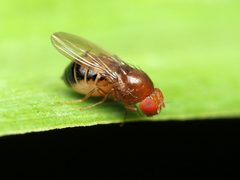
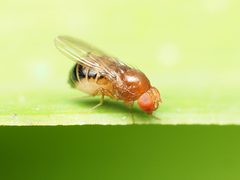
Drosophila cardini is a fruit fly in the Drosophila cardini species group, first described by Sturtevant in 1916 from Havana, Cuba. It belongs to a morphologically similar complex that includes D. cardinoides and D. polymorpha. Taxonomic reanalysis of Brazilian specimens revealed that most records previously attributed to D. cardinoides were actually D. cardini, particularly from drier regions. The species demonstrates strong to arid and semi-arid environments compared to its .
Pronunciation
How to pronounce Drosophila cardini: /droʊˈsɒfɪlə kɑrˈdiːni/
These audio files are automatically generated. While they are not always 100% accurate, they are a good starting point.
Identification
Drosophila cardini is morphologically similar to D. cardinoides and D. polymorpha, requiring examination of male terminalia for reliable identification. The male terminalia have been redescribed and illustrated to facilitate proper determination. Earlier Brazilian records of D. cardinoides should be regarded with caution due to widespread misidentification.
Images
Habitat
Caatingas (semi-arid areas), cerrados (savannas), coastal zones, and restingas (strand vegetation). Inland forests. Notably absent from Atlantic Forest. Shows stronger to drier environments than D. cardinoides.
Distribution
Native to Cuba ( from Havana). In Brazil: abundant in caatingas, cerrados, coast, and restingas; present in inland forests; absent from Atlantic Forest. Also recorded from Hawaii, United States. Previously underreported in Brazil due to misidentification as D. cardinoides.
Similar Taxa
- Drosophila cardinoidesMorphologically similar ; most Brazilian specimens formerly identified as D. cardinoides were reidentified as D. cardini, especially from drier areas. D. cardini appears better adapted to arid environments.
- Drosophila polymorphaCo-occurs in cerrados, coast, and restingas where both are equally abundant; distinct species in the same species group.
Misconceptions
Earlier Brazilian reports indicating absence of D. cardini should be regarded with caution. The was present but misidentified as D. cardinoides due to morphological similarity and lack of proper diagnostic resources.
More Details
Taxonomic History
group subject to taxonomic reanalysis in Brazil, with male terminalia of redescribed to clarify identification criteria.
Conservation of Parasitoids
Research on of related Drosophila (e.g., D. suzukii) indicates that some (abamectin, spinetoram, spinosad) show lower to parasitoid , which may have implications for in regions where D. cardini occurs.
Sources and further reading
- BugGuide
- GBIF taxonomy match
- iNaturalist taxon
- NCBI Taxonomy
- Catalogue of Life
- Christine Tabuloc's Seminar: Inside Her Intricate Research World of Drosophila | Bug Squad
- UC Davis Seminars: From Spotted Wing Drosophila to Spider Glue to Wild Bees | Bug Squad
- African Fig Fly Meets Spotted-Wing Drosophila in the U.S.
- Dry, Red Sticky Trap Improves Spotted-Wing Drosophila Monitoring
- New Study Aims to Protect Parasitoids of Spotted-Wing Drosophila
- Spotted-Wing Drosophila: New Seasonal Activity Model Will Aid IPM Efforts
- Preliminary data on the geographical distribution of Drosophila species within morphoclimatic domains of Brazil. III. The cardini group