
Curtonotidae
Enderlein, 1914
Quasimodo flies
Genus Guides
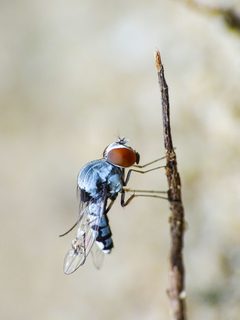
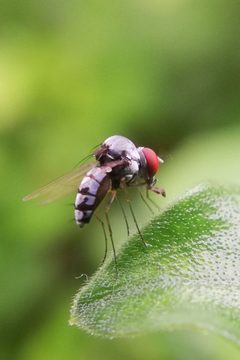
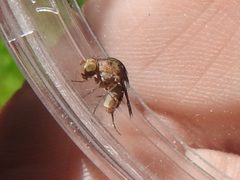
1, commonly known as quasimodo flies, is a small of humpbacked flies within the order Diptera. The family has a worldwide distribution but is predominantly found in tropical to subtropical regions of Africa and the Neotropics, with very few in the Nearctic, Australasian/Oceanian, and Palaearctic regions. Many species remain undescribed in collections due to limited taxonomic attention since the 1930s. The family has been variously classified historically but now holds widely accepted family rank.
Pronunciation
How to pronounce Curtonotidae: //kɜːrtəˈnɒtɪdiː//
These audio files are automatically generated. While they are not always 100% accurate, they are a good starting point.
Identification
Medium-sized flies with a distinctive humpbacked profile. with well-developed cruciate postvertical bristles and three orbital bristles on each side of the . bears long plumosity. Wing with interrupted twice: once to the humeral crossvein and once before the subcosta. Subcosta developed throughout its length to the costa. basal wing and discoidal wing cell are . Costa bears spinules.
Images
Habitat
have been documented in warthog burrows, bear burrows, and densely shaded humid during hot, dry seasons. Some species disperse during cooler periods of the year.
Distribution
Worldwide but with highly uneven distribution. Predominantly tropical to subtropical Africa and the Neotropics. Very few in Nearctic (1 species), Australasian/Oceanian (1 species), and Palaearctic (1 species) regions. Afrotropical region contains many species. One fossil species, Curtonotum gigas Théobald, known from Oligocene deposits in France.
Host Associations
- Schistocerca gregaria - stages scavengers within podsGreathead 1958
Life Cycle
stages have been recorded as scavengers. Larvae of Cyrtona albomacula reared from human faeces in Zimbabwe.
Behavior
Curtonotum quinquevittatum has been observed leaving warthog burrow at night during hot, dry seasons. Cyrtona rest in densely shaded humid during hot, dry seasons and disperse during cooler parts of the year.
Similar Taxa
- DrosophilidaeHistorically placed within this ; distinguished by wing venation features including double interruption of and basal and discoidal wing
- DiastatidaeFormerly classified together; separated by 's distinctive humpbacked and specific wing fusion pattern
- EphydridaePreviously included this group; differs in wing venation and body shape
Sources and further reading
- BugGuide
- Wikipedia
- GBIF taxonomy match
- iNaturalist taxon
- NCBI Taxonomy
- Catalogue of Life
- Observations on the biology and anatomy of Curtonotidae (Diptera: Schizophora)
- A revision of Afrotropical Quasimodo flies (Diptera: Schizophora; Curtonotidae). Part IV—the continental Afrotropical species of Curtonotum Macquart, with descriptions of thirteen new species and a combined phylogenetic analysis of the Curtonotidae
- Curtonotum helvum (Loew) (Diptera: Curtonotidae): A New State Record for Delaware and Observations of Habitat Type
- Revision of the Central American and Mexican species of the Curtonotum murinum species complex (Diptera: Curtonotidae)