
Diamesinae
Edwards, 1929
Genus Guides
3- Boreoheptagyia
- Diamesa(Winter Midges)
- Protanypus
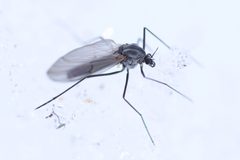
Diamesinae is a of non-biting midges (Chironomidae) primarily associated with cold-water , particularly glacial-fed streams. The subfamily includes several tribes: Diamesini, Boreoheptagyiini, Protanypini, and two fossil tribes (Cretodiamesini, Eugenodiamesini). such as Diamesa are among the insect colonizers of kryal habitats in alpine regions. delimitation in this group often requires integrative approaches combining with pupal , as males of some genera show limited morphological differentiation.
Pronunciation
How to pronounce Diamesinae: /ˌdaɪəˈmɛsɪnaɪ/
These audio files are automatically generated. While they are not always 100% accurate, they are a good starting point.
Identification
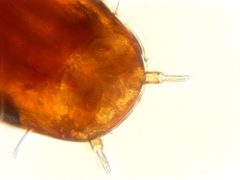
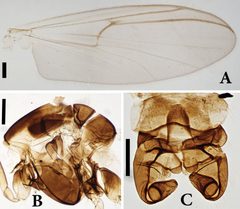
Diamesinae larvae are recognized by an annulate third antennal segment and characteristics of the premento-hypopharyngeal complex. Pupae are distinguished by dorso-central thoracic setation with no prealar setae, lack of hooklets on tergite II, and anal lobes with short and hooked macrosetae. males of some , particularly Pseudokiefferiella, show poor morphological differentiation between , making pupal structures essential for reliable identification when associated with male imagines. using 658- fragments of the mitochondrial oxidase subunit I gene is effective for species delimitation.
Images
Habitat
Primarily cold-water environments including glacial-fed streams (kryal ), high-altitude lakes, and mountain watercourses. Documented locations include streams at 1400–2700 m elevation in the Caucasus, glacial streams below the Gornera glacier in the Swiss Alps, and high-altitude lakes at 4200 m in the Nevado de Toluca volcano crater in central Mexico.
Distribution
Holarctic region with alpine and arctic occurrences; documented from the European Alps, Caucasus, Pamir, Tian-Shan, Himalayas, Sayan Mountains, Wrangel Island, Iran, Lebanon, North America, and the Andes. The Pseudodiamesa has been recorded from central Mexico, representing a transitional zone between Nearctic and Neotropical regions. Some appear to specific glacial drainage systems, such as Diamesa caucasica restricted to the Terek River basin.
Life Cycle
Development includes , larval, pupal, and stages. The pupal stage is taxonomically informative and often required for identification.
Ecological Role
colonizers of kryal in alpine regions; among the aquatic insects most threatened by extinction due to glacial retreat from climate change. Serve as primary insect components of cold-water stream in mountainous areas.
Human Relevance
Used as indicators of climate change impacts on alpine freshwater . Threatened in glacial streams highlight vulnerability of cold-adapted aquatic insects to loss from glacial retreat.
Similar Taxa
- OrthocladiinaeAnother of Chironomidae with which Diamesinae shares general ; distinguished by pupal and larval characters including thoracic setation patterns and antennal segmentation.
- ChironominaeLargest of Chironomidae; Diamesinae distinguished by cold-water preference and specific pupal characters such as lack of hooklets on tergite II.
More Details
Taxonomic challenges
Molecular has revealed inconsistencies between morphological and molecular identification in some Diamesa groups, particularly the cinerella and zernyi groups. color, traditionally used as a diagnostic larval character, has been questioned for validity. Studies suggest D. bohemani and D. zernyi, as well as D. cinerella and D. tonsa, represent single species with -level variation rather than distinct species.
Historical biogeography
Radiation of alpine Diamesa appears driven by climatic events of the Pliocene and Pleistocene, with glacial period alternations promoting speciation. The separation of D. steinboecki is attributed to tectonic movements of the Periadriatic fault system facilitating of newly formed lakes and streams.
Sources and further reading
- BugGuide
- Wikipedia
- iNaturalist taxon
- NCBI Taxonomy
- Catalogue of Life
- 5 Systematics, Biology and Ecology of the Diamesinae
- Pseudokiefferiella ferringtoni sp. nov. (Diptera: Chironomidae: Diamesinae) from North America
- On the taxonomy and distribution of Diamesa insignipes Kieffer (Diptera: Chironomidae: Diamesinae)
- First record of the Pseudodiamesa branickii species group (Diptera: Chironomidae: Diamesinae) from central Mexico
- Congruence between molecular and morphological systematics of Alpine non‐biting midges (Chironomidae, Diamesinae)
- Morphological redescription and DNA barcoding of Diamesa longipes Goetghebuer, 1941 (Diptera: Chironomidae: Diamesinae) from the Swiss Alps
- Redescription of the Caucasian endemic Diamesa caucasica Kownacki et Kownacka (Diptera: Chironomidae: Diamesinae)
- Taxonomy of Diamesa steinboecki group (Diptera: Chironomidae: Diamesinae), with description and DNA barcoding of new species. I. Subgroups steinboecki and longipes
- Description of the pupa of "Diamesinae Genus P" Doughman, 1985 (Diptera: Chironomidae), with comments on habitat, distribution and further characterization of the larva
- The Diamesinae (Diptera: Chironomidae) in High-Altitude Andean Streams Using Morphological and Molecular Approaches.