
Asteromyia carbonifera
(Osten Sacken, 1862)
Carbonifera goldenrod gall midge
Asteromyia carbonifera is a gall midge that forms an obligate mutualistic relationship with the fungus Botryosphaeria dothidea. Females carry fungal conidia in specialized mycangia on the ovipositor and deposit them alongside on Solidago plants. The fungus induces gall formation, and larvae feed on fungal tissue within the gall. This insect-fungus mutualism is essential for successful development; neither partner can complete its independently under natural conditions.
Pronunciation
How to pronounce Asteromyia carbonifera: /ˌæstɛroʊˈmaɪə ˌkɑːrbəˈnɪfərə/
These audio files are automatically generated. While they are not always 100% accurate, they are a good starting point.
Identification
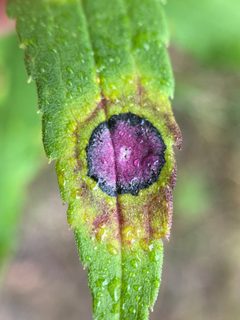
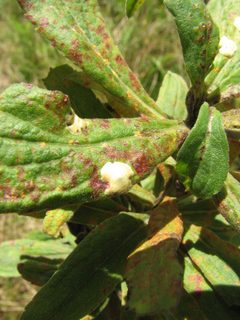
Larvae possess specialized mycangia—pocket-like structures on the ovipositor for storing fungal conidia. are small, delicate flies typical of Cecidomyiidae. Galls on Solidago stems or leaves contain blackened, carbon-like fungal tissue, distinguishing them from other gall-forming insects on goldenrod. The association with Botryosphaeria dothidea is diagnostic for this .
Images
Habitat
Associated with Solidago (goldenrod) plants in open fields, meadows, and disturbed where goldenrod grows.
Distribution
Recorded from Vermont and elsewhere in the United States. GBIF distribution records indicate presence in the US, with iNaturalist observations suggesting a broader North American range.
Diet
Larvae feed primarily on the mycelium of Botryosphaeria dothidea, the symbiotic fungus that forms the gall structure. This represents a mycophagous diet within the context of an obligate mutualism.
Host Associations
- Solidago altissima - plantPrimary for gall induction; other Solidago may be used
- Botryosphaeria dothidea - obligate mutualistic Fungus forms gall structure; larvae feed on fungal tissue and transport conidia in mycangia
- Torymus capite - whose attack is inhibited by the fungal
Life Cycle
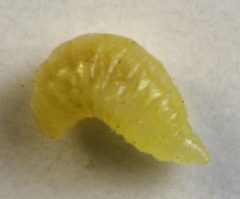
Females lay up to 300 per oviposition event, depositing fungal conidia from mycangia alongside eggs. Larvae develop within the fungus-induced gall, feeding on Botryosphaeria dothidea mycelia. occurs within the gall. are short-lived and produce a single batch of during pupal development, then engage in multiple oviposition events.
Behavior
Females actively collect and transport fungal conidia in specialized mycangia on the ovipositor, then inoculate plant tissue during -laying. Clutch size varies based on maternal mortality risk: females facing higher mortality risk between oviposition events deposit larger clutches to maximize through moderately fecund offspring rather than few highly fecund individuals.
Ecological Role
Induces gall formation on Solidago through fungal mutualism, manipulating plant tissue development. The fungal provides physical defense against attack by Torymus capite. Represents a rare example of obligate insect-fungus mutualism in gall-forming insects.
Similar Taxa
- Other Asteromyia speciesCongeneric gall midges may form similar associations with fungi or induce comparable galls on Asteraceae; differentiation requires examination of fungal identity and gall
- Other Cecidomyiidae on SolidagoMultiple gall midge inhabit goldenrod; A. carbonifera is distinguished by the black, carbon-like fungal gall tissue and documented association with Botryosphaeria dothidea
More Details
Evolutionary significance
A. carbonifera represents an incipient adaptive radiation with genetically differentiated diverging in gall on Solidago altissima, potentially driven by pressure. This system provides a model for studying the evolution of obligate mutualisms and their role in diversification.
Mycangia structure
The presence of mycangia on the ovipositor for fungal transport is a specialized morphological that facilitates the of the fungal and ensures successful gall induction.
Sources and further reading
- BugGuide
- Wikipedia
- GBIF taxonomy match
- iNaturalist taxon
- NCBI Taxonomy
- Catalogue of Life
- Selective Pressures on Clutch Size in the Gall Maker Asteromyia Carbonifera
- Use of Symbiotic Fungus by The Gall Maker Asteromyia Carbonifera to Inhibit Attack by the Parasitoid Torymus Capite
- Dissecting the association between a gall midge, Asteromyia carbonifera, and its symbiotic fungus, Botryosphaeria dothidea