
Taxodiomyia cupressiananassa
(Osten Sacken, 1878)
cypress twig gall midge
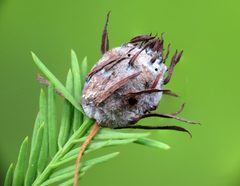
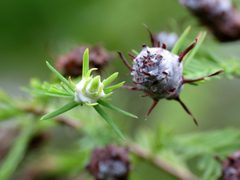
A gall midge in the Cecidomyiidae that induces distinctive twig galls on cypress trees. The spongy galls are initially snow-white, turning brown with age, and eventually drop from the tree with leaf fall. Larvae pupate within the galls, with emerging later in the season or following spring. The is considered a pest of ornamental and native cypress plantings.

Pronunciation
How to pronounce Taxodiomyia cupressiananassa: /tæksiˌoʊdioʊˈmaɪə kjuˌprɛsiænəˈnæsə/
These audio files are automatically generated. While they are not always 100% accurate, they are a good starting point.
Identification
Galls appear as globular, spongy growths on cypress twigs, often mistaken for cones. Fresh galls are snow-white and soft, becoming rusty-brown and firmer with age. Galls bear numerous small projections, giving them a spiky appearance. The galls are larger and more irregular than true cypress cones. are tiny flies typical of gall midges, with reduced wing venation and long, bead-like .
Images
Habitat
Associated with cypress trees in wetland and riparian settings, including swamps, pond margins, and floodplain forests. The has been observed on planted bald cypress trees north of their native range.
Distribution
Native to southeastern United States; recorded from Missouri, Illinois, and Florida. The occurs wherever its cypress trees are present, including areas where bald cypress has been planted outside its natural range.
Seasonality
Galls are visible on trees from mid-growing season through fall. may emerge from galls still on the tree later in the season. Larvae typically overwinter in fallen galls, with and adult occurring the following spring.
Host Associations
- Taxodium distichum - primary bald cypress
- Taxodium ascendens - primary pond cypress
Life Cycle
are laid on cypress twigs. Larvae induce gall formation and develop inside the spongy gall tissue. occurs within the gall. Galls drop from the tree with leaf fall in autumn. Larvae overwinter in fallen galls, completing development and emerging as the following spring. Some adults may emerge from galls remaining on the tree later in the same season.
Behavior
Larvae manipulate plant growth through chemical secretions, inducing the formation of specialized gall structures that provide shelter and nutrition. The galls are initially soft and white, hardening and darkening as they age.
Ecological Role
Acts as a gall-forming herbivore on cypress trees. The galls represent a significant sink for plant resources and may affect twig growth. The serves as a food source for and other natural enemies within the gall .
Human Relevance
Considered a pest of ornamental bald cypress and pond cypress in urban plantings and managed landscapes. Gall formation can reduce aesthetic value of trees and potentially impact growth, though economic damage is generally minor. Management options are limited and rarely warranted.
Similar Taxa
- Gymnosporangium juniperi-virginianaeProduces similarly colored, spiky galls on Juniperus virginiana (eastern red-cedar), which is in the same Cupressaceae. The rust fungus galls differ in being smaller, harder, and producing gelatinous telial horns in wet conditions, whereas T. cupressiananassa galls are larger, spongy, and lack such structures.
Sources and further reading
- BugGuide
- Wikipedia
- GBIF taxonomy match
- iNaturalist taxon
- NCBI Taxonomy
- Catalogue of Life
- Cecidomyiidae | Beetles In The Bush
- galls | Beetles In The Bush
- 🌿 Botanizing w/ the Webster Groves Nature Study Society (WGNSS) Botany Group at Rockwoods Reservation – 3 Nov 2025 | Beetles In The Bush
- science | Beetles In The Bush | Page 9
- Missouri | Beetles In The Bush | Page 4
- Cypress Twig Gall Midge, Taxodiomyia cupressiananassa (Osten Sacken) (Insecta: Diptera: Cecidomyiidae)
- Biology of the Cypress Twig Gall Midge, Taxodiomyia cupressiananassa (Diptera: Cecidomyiidae), in Central Illinois