
Chromolepida bella
Cole, 1923
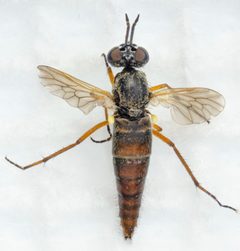
Chromolepida bella is a of stiletto fly in the Therevidae, described by Cole in 1923. The Chromolepida belongs to a diverse family of predatory flies commonly known as stiletto flies due to their elongated, piercing mouthparts. Therevidae species are generally found in dry, sandy where their larvae prey on other soil-dwelling . As a member of this family, C. bella likely shares the general therevid body plan and ecological habits, though specific details about this particular species remain poorly documented in available literature.
Pronunciation
How to pronounce Chromolepida bella: /ˌkroʊməˈlɛpɪdə ˈbɛlə/
These audio files are automatically generated. While they are not always 100% accurate, they are a good starting point.
Identification
Chromolepida bella can be distinguished from other Therevidae by its placement in the Chromolepida, which is characterized by specific wing venation patterns and body proportions. Accurate identification to level requires examination of male genitalia and comparison with . The species name "bella" (Latin for "beautiful") may reference distinctive coloration or patterning, though original description details are not provided in available sources.
Images
Distribution
Distribution records for Chromolepida bella are sparse. The is known from limited collection records, with iNaturalist documenting 10 observations suggesting it has been encountered in the field, though specific localities are not detailed in available sources.
Behavior
As a member of Therevidae, of Chromolepida bella likely visit flowers for nectar, a common in the . Larvae of stiletto flies are predatory in soil or decaying organic matter, though this has not been directly observed for this .
Ecological Role
Stiletto flies contribute to soil dynamics as larval and may serve as as . The specific ecological role of Chromolepida bella has not been studied.
Similar Taxa
- Other Therevidae generaShare similar body plan and general ; require genitalia examination or wing venation analysis for definitive separation.
- Asilidae (robber flies)Both belong to Asilomorpha and share predatory habits and somewhat similar appearance; Therevidae generally have more slender bodies and different wing venation.
More Details
Taxonomic history
Chromolepida bella was described by Cole in 1923. The Chromolepida remains poorly studied, with limited modern taxonomic revision.
Data availability
The iNaturalist platform records 10 observations of this , indicating it has been documented in citizen science efforts, though detailed biological information has not been compiled in accessible literature.
Sources and further reading
- BugGuide
- Wikipedia
- GBIF taxonomy match
- iNaturalist taxon
- NCBI Taxonomy
- Catalogue of Life
- Dr. Charles L. “Chuck” Bellamy—Tribute to a friend | Beetles In The Bush
- Dr. Charles L. “Chuck” Bellamy – 12th Honorary Member of The Coleopterists Society | Beetles In The Bush
- North America’s most “extreme” jewel beetle | Beetles In The Bush
- Two new species of Agrilus from Mexico | Beetles In The Bush
- Mexico 1992—Gang of Ten | Beetles In The Bush
- Madagascar | Beetles In The Bush