
Holopogon
Kom. & Nevski, 1935
Species Guides
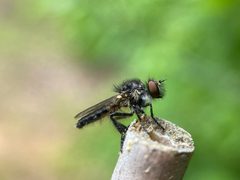
19Holopogon is a of robber flies (Diptera: Asilidae) in the Brachyrhopalinae. These predatory insects are characterized by their compact, often small to medium body size and distinctive wing venation patterns. The genus was established by Komaroff and Nevski in 1935 and is distinguished from related genera by specific structural features of the male genitalia and wing .
Pronunciation
How to pronounce Holopogon: //hɒloʊˈpoʊɡɒn//
These audio files are automatically generated. While they are not always 100% accurate, they are a good starting point.
Identification
Distinguished from other Brachyrhopalinae by combination of: compact body with relatively short legs; wing with reduced number of ; male terminalia with simplified epandrium lacking prominent surstyli; and specific bristle patterns on . Differs from closely related Brachyrhopalum by wing venation details and genitalic structure. Identification to level requires examination of male genitalia and often microscopic analysis of thoracic bristle patterns.
Images
Appearance
Small to medium-sized robber flies with compact body form. typically broad with large, widely separated . short with three segments, terminal segment bearing a style. robust, often with distinctive bristle patterns. Wings clear or lightly tinted with characteristic venation including a distinct anal lobe. Legs relatively short and stout, armed with spines for capturing prey. tapering, often with pale or contrasting markings. Male genitalia with distinctive epandrial and hypandrial structures used in identification.
Habitat
Inhabits open, dry to mesic environments including grasslands, savannas, forest edges, and rocky outcrops. Often found in areas with sparse vegetation and exposed soil or rock substrates. Some associated with sandy or calcareous soils. Elevation range varies by species from lowlands to montane regions.
Distribution
Primarily distributed across the Palearctic region, with records from Europe through Central Asia to Siberia and the Russian Far East. Some extend into the eastern Palearctic. Center of diversity appears to be in steppe and forest-steppe zones of Eurasia. Specific range limits vary considerably among constituent species.
Seasonality
activity generally occurs during warmer months, typically from late spring through early autumn depending on latitude and elevation. Peak activity in temperate regions usually June–August. Some may show bimodal activity patterns with spring and late summer .
Life Cycle
Complete with , larval, pupal, and stages. Eggs deposited in soil or among plant debris. Larvae predatory in soil or decaying organic matter, feeding on other insect larvae and small . occurs in soil. Developmental timing varies with climate; typically in temperate regions. Specific details of larval poorly documented for most .
Behavior
are sit-and-wait , perching on bare ground, rocks, or low vegetation to ambush passing prey. typically short and rapid, used primarily for prey capture and evasion. Males patrol territories and engage in aerial pursuit of females. Both sexes may be observed basking on warm substrates.
Ecological Role
function as of small flying insects, potentially contributing to regulation of of flies, , bees, and other small arthropods. Larvae are soil-dwelling predators that may influence soil structure. Specific quantitative impacts on prey populations unknown.
Human Relevance
No direct economic importance. Occasionally observed by entomologists and naturalists. Not known to bite humans or transmit . Potential value as bioindicators of quality in grassland and steppe , though not formally assessed.
Similar Taxa
- BrachyrhopalumSimilar compact body form and wing venation; distinguished by male genitalic structure and details of bristle arrangement on
- StenopogonOverlaps in size range and ; Stenopogon typically more slender with longer legs and different wing reduction pattern
- DysmachusSimilar ground-dwelling habits; Dysmachus generally larger with more prominent facial mystax and different abdominal markings
More Details
Taxonomic History
The was established by Russian entomologists N.F. Komaroff and A.A. Nevski in 1935 based on material from Central Asia. The authorship is sometimes cited as 'Kom. & Nevski' or variants thereof. Historical confusion exists with the plant genus Holopogon (Campanulaceae), which is an unrelated homonym based on Greek 'holos' (whole) and 'pogon' (beard). The insect genus name shares the same etymological root referring to the dense facial beard (mystax) characteristic of these flies.
Species Diversity
Approximately 20–25 described , with additional undescribed suspected from under-sampled regions of Central Asia. Species boundaries often subtle, requiring careful examination of male genitalia. No comprehensive modern revision of the exists.