
Dicolonus
Loew, 1866
Species Guides
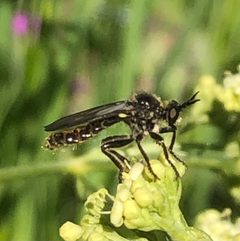
4Dicolonus is a of robber flies ( Asilidae) established by Loew in 1866. The genus contains approximately five described distributed across North America and parts of Asia. As members of Asilidae, species in this genus are predatory flies that capture other insects in . The genus is relatively small and understudied compared to other asilid genera.
Pronunciation
How to pronounce Dicolonus: //daɪˈkɑloʊnəs//
These audio files are automatically generated. While they are not always 100% accurate, they are a good starting point.
Images
Distribution
of Dicolonus have been recorded in North America (including the United States) and parts of Asia (including Japan, based on D. argentatus described by Matsumura).
Ecological Role
As predatory insects, in this likely function as of other flying insects, contributing to control of potential pest species within their .
Similar Taxa
- Other Asilidae generaDicolonus share the general robber fly body plan—stout, bristly flies with a concave , strong legs for capturing prey, and a tapered —but specific diagnostic features separating this from related asilids require examination of male terminalia and other subtle morphological characters not readily summarized here.
More Details
Taxonomic history
The was erected by Hermann Loew in 1866 with D. simplex as the type . Two additional species were described by Adisoemarto and Wood in 1975, indicating continued but limited taxonomic attention to this group.
Data limitations
The is poorly represented in biological databases and literature. iNaturalist records 57 observations for the entire genus, suggesting either genuine rarity, identification challenges, or underreporting. No comprehensive revision of the genus has been published.