
Cophura vitripennis
(Curran, 1927)
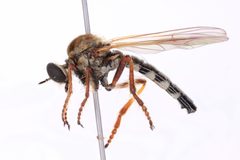
Cophura vitripennis is a of robber fly (Diptera: Asilidae) in the Brachyrhopalinae, originally described by Charles Howard Curran in 1927. The species epithet 'vitripennis' (Latin for 'glass-winged') refers to the transparent or hyaline wing condition. As with other Asilidae, this species is presumed to be a predatory insect, though specific biological details remain poorly documented in the available literature. The Cophura is part of the diverse robber fly fauna of the Americas.
Pronunciation
How to pronounce Cophura vitripennis: //ˈkoʊ.fjʊ.rə vɪˈtraɪˌpɛn.nɪs//
These audio files are automatically generated. While they are not always 100% accurate, they are a good starting point.
Identification
Identification of Cophura vitripennis requires examination of wing venation, body proportions, and genitalic structures typical of the Cophura. The specific epithet suggests hyaline or glassy wings, which may distinguish it from with more pigmented wings. Accurate identification to level within Cophura necessitates reference to the original description (Curran 1927) and subsequent taxonomic revisions of the genus.
Images
More Details
Taxonomic history
Described by C.H. Curran in 1927. The Cophura was established by Macquart in 1838 and is currently classified in the Brachyrhopalinae of Asilidae.
Etymology
The specific epithet 'vitripennis' derives from Latin 'vitrum' (glass) and 'penna' (wing), referring to the transparent or hyaline wing condition characteristic of this .
Sources and further reading
- BugGuide
- GBIF taxonomy match
- iNaturalist taxon
- Catalogue of Life
- How Jeff Smith’s 'Neighborly' Project Will Benefit the Bohart Museum of Entomology | Bug Squad
- Publications | Entomology Research Museum
- Homalodisca vitripennis Archives - Entomology Today
- A New Guide for Understanding Insect Vectors of Plant Pathogen Xylella fastidiosa
- Pierce's Disease: Areawide Project Shows IPM Success for 20 Years