
Eumecomera
Arnett, 1951
Species Guides
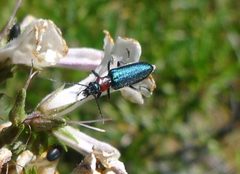
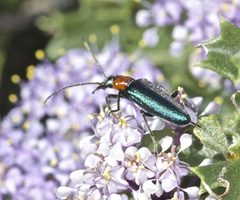
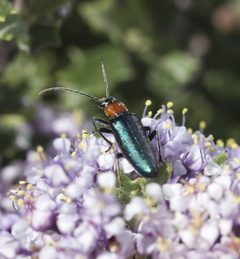
3Eumecomera is a of false blister beetles in the Oedemeridae, established by Arnett in 1951. The genus contains at least three described : E. bicolor, E. cyanipennis, and E. obscura. These beetles belong to a family whose members are commonly known as false blister beetles due to their resemblance to true blister beetles (Meloidae).
Pronunciation
How to pronounce Eumecomera: /ˌjuːmiːkəˈmɛrə/
These audio files are automatically generated. While they are not always 100% accurate, they are a good starting point.
Identification
Members of Eumecomera can be distinguished from similar oedemerid by their overall body form and coloration patterns. E. bicolor and E. cyanipennis, as suggested by their epithets, exhibit distinctive color patterns that may aid in identification. The genus can be separated from true blister beetles (Meloidae) by structural features of the Oedemeridae, including the soft-bodied nature and specific tarsal configurations characteristic of the family.
Images
Distribution
The three described (E. bicolor, E. cyanipennis, and E. obscura) were described from North America, with E. obscura described by LeConte in 1854 and the other two species by Horn in 1870.
Similar Taxa
- Meloidae (true blister beetles)Oedemeridae are commonly called false blister beetles due to superficial resemblance; Eumecomera can be distinguished by -level characters including body texture and tarsal structure.
- Other Oedemeridae generaSeparation from related oedemerid requires examination of specific morphological characters such as pronotal shape, elytral , and male genitalia.
More Details
Taxonomic history
The Eumecomera was established by Arnett in 1951, relatively late compared to the description of its constituent in the mid-19th century.
iNaturalist observations
The has 73 observations on iNaturalist, indicating limited but documented occurrence in citizen science records.