
Hoshihananomia octopunctata
(Fabricius, 1775)
Eight-spotted Tumbling Flower Beetle
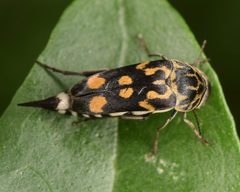
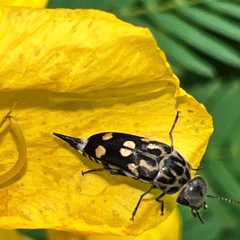
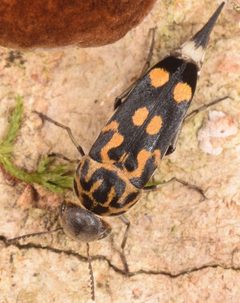
Hoshihananomia octopunctata is a of tumbling flower beetle in the Mordellidae, first described by Fabricius in 1775. It is native to North America, with documented records from Canada (Ontario, Québec) and the United States (Vermont). The "Eight-spotted Tumbling Flower Beetle" refers to characteristic markings on the . Like other members of Mordellidae, it exhibits the distinctive tumbling escape when disturbed.
Pronunciation
How to pronounce Hoshihananomia octopunctata: /hoʊʃiˌhænəˈnoʊmiə ˌɑktoʊˌpʌŋkˈteɪtə/
These audio files are automatically generated. While they are not always 100% accurate, they are a good starting point.
Identification
Distinguished from other tumbling flower beetles by the eight-spotted pattern on the , referenced in both the scientific epithet "octopunctata" (eight-spotted) and the . Members of the Hoshihananomia can be separated from related genera by genitalic and antennal characteristics, though specific diagnostic features for H. octopunctata require examination.
Images
Distribution
North America, with confirmed records from Ontario and Québec in Canada, and Vermont in the United States.
Behavior
Exhibits tumbling typical of Mordellidae: when disturbed, the flexes its body and uses its large hind legs to launch itself into a tumbling , making capture difficult.
Similar Taxa
- Other Hoshihananomia speciesCongeneric share the general body form of Mordellidae and require detailed examination of genitalia, punctation patterns, and antennal structure for reliable separation.
- Other Mordellidae generaAll tumbling flower beetles share the characteristic hump-backed body shape, pointed , and tumbling escape ; -level identification requires examination of antennal club structure and body proportions.
More Details
Nomenclatural history
The was first described by Johan Christian Fabricius in 1775, making it one of the earlier described species in the Mordellidae.
Observation frequency
The has been documented in 827 iNaturalist observations, indicating it is encountered with moderate frequency by naturalists in its range.