Epicauta cinerea
(Forster, 1771)
clematis blister beetle
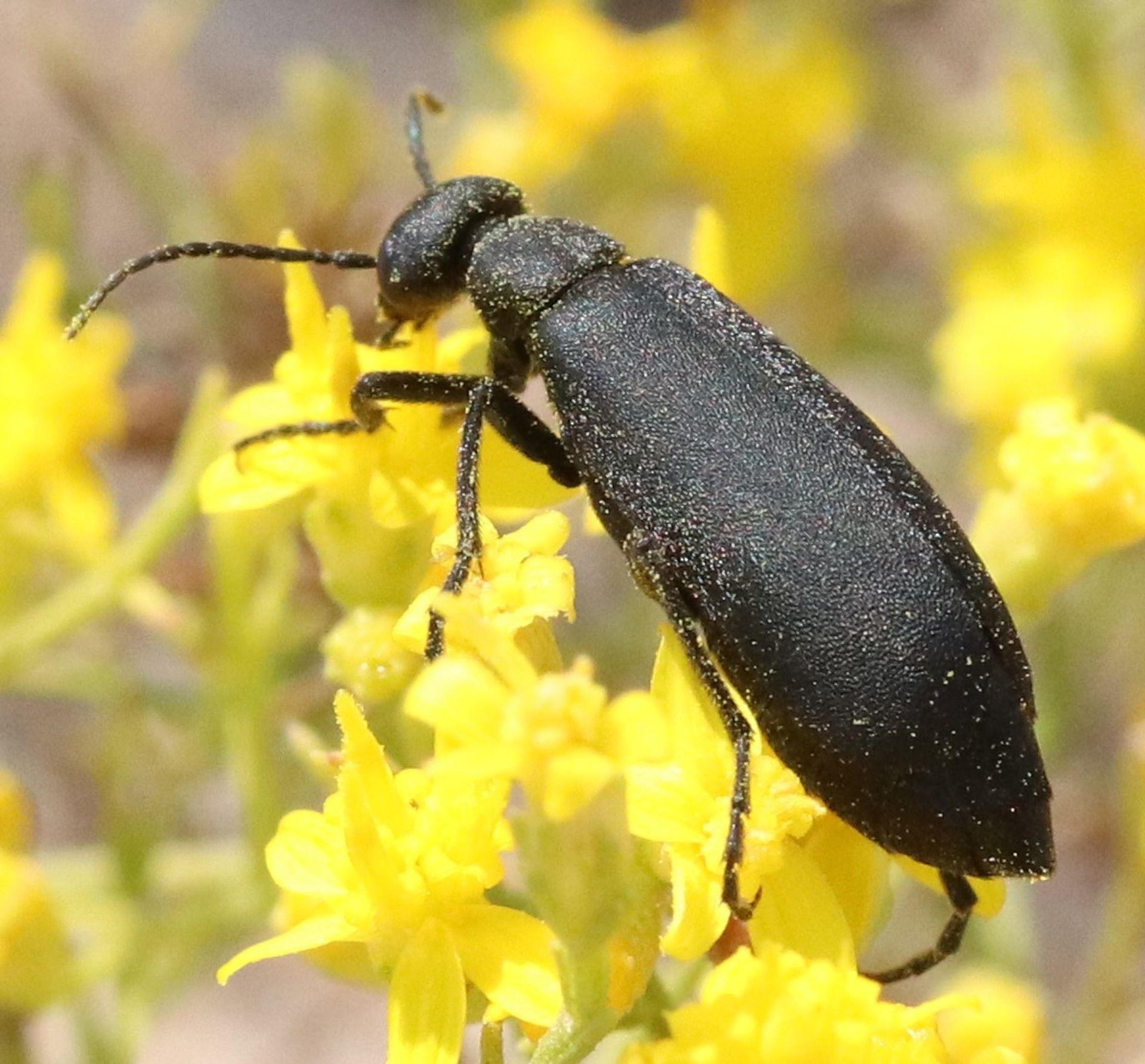
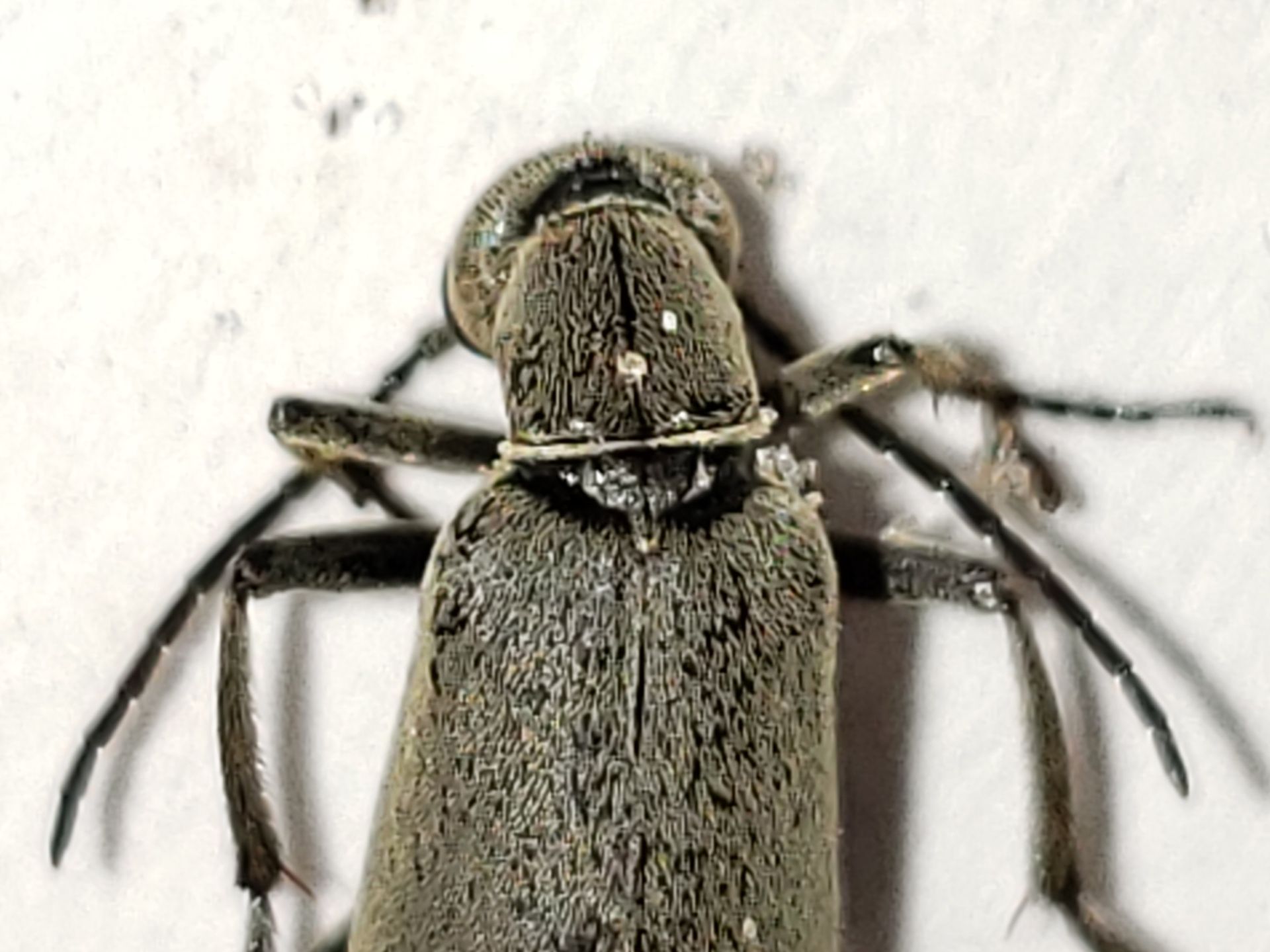
Epicauta cinerea, commonly known as the clematis , is a North American in the Meloidae. It is one of many gray-colored Epicauta species that can be challenging to distinguish without close examination. The species has been documented feeding on flowers of yellow-flowered Asteraceae, particularly Gutierrezia sarothrae (broom snakeweed), in Oklahoma's Gypsum/Red Hills region. Like other blister beetles, it possesses chemical defenses based on .
Pronunciation
How to pronounce Epicauta cinerea: //ˌɛpɪˈkaʊtə sɪˈnɛriə//
These audio files are automatically generated. While they are not always 100% accurate, they are a good starting point.
Images
Habitat
Observed in prairie of the Gypsum/Red Hills geological formation in Oklahoma, characterized by flat-topped mesas with gypsum caps over soft red clay. have been found on yellow-flowered Asteraceae in these open, dry grassland environments.
Distribution
North America. Documented from Canadian provinces including Manitoba, New Brunswick, and Ontario, as well as the United States.
Diet
have been observed feeding on flowers of Gutierrezia sarothrae (broom snakeweed), a yellow-flowered Asteraceae. The specific plant relationship implied by the "clematis " has not been verified in the provided sources.
Similar Taxa
- Epicauta (Epicauta) pruinosaAnother gray Epicauta with which E. cinerea may be confused; E. pruinosa is notably abundant in museum collections (562 specimens at UCR) and shares similar coloration
- Other gray Epicauta speciesThe Epicauta contains numerous gray-colored that are difficult to distinguish without detailed examination of genitalic characters or other subtle morphological features