
Euglenes
Westwood, 1830
Species Guides
1Euglenes is a of ant-like leaf beetles in the Aderidae, established by Westwood in 1830. The genus contains approximately five to six described distributed primarily in Europe. Members of this genus are small beetles that exhibit -mimicry, a characteristic trait of the family Aderidae. The genus includes species such as Euglenes pygmaeus, one of the earlier described species dating to 1775.
Pronunciation
How to pronounce Euglenes: /juːˈɡleːnɛs/
These audio files are automatically generated. While they are not always 100% accurate, they are a good starting point.
Identification
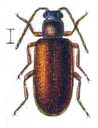
Euglenes can be recognized by their -like body form, with a constricted waist-like petiole between the pronotum and , resembling ants in general habitus. The belongs to Aderidae, distinguished from other ant-like (such as Anthicidae) by specific antennal and tarsal characteristics. Species-level identification requires examination of male genitalia and other fine morphological details.
Images
Distribution
Europe. Distribution records indicate presence in Norway (NO) and Sweden (SE).
Similar Taxa
- AderusBoth belong to Aderidae and share -like ; distinguished by specific structural features of and body proportions
- Anthicidae (family)Ant-like beetles with superficially similar appearance; Aderidae including Euglenes have 11-segmented with a 3-segmented club, while Anthicidae have different antennal structure
More Details
Species included
The contains approximately five to six described : Euglenes nitidifrons Thomson, 1886; Euglenes oculatissimus (Wollaston, 1864); Euglenes oculatus (Paykull, 1798); Euglenes pygmaeus De Geer, 1775; Euglenes serricornis Reitter, 1885; and Euglenes wollastoni Israelson, 1971.
Taxonomic note
The Wikipedia entry lists 'about five described ' while simultaneously listing six species, suggesting possible taxonomic uncertainty or synonymy involving one of the listed names.