
Tachinus rufipes
(Linnaeus, 1758)
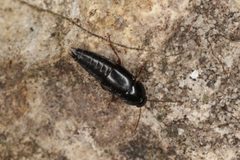
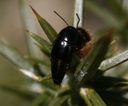
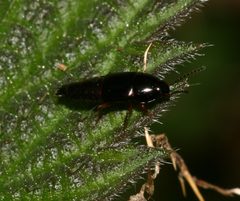
Tachinus rufipes is a rove beetle in the Staphylinidae, characterized by reddish legs that give the its name. Originally described by Linnaeus in 1758 from European material, it has since been introduced to North America where it is now established in eastern Canada and the northeastern United States. The species belongs to the Tachyporinae, a group known for rapid movements and association with decaying organic matter.
Pronunciation
How to pronounce Tachinus rufipes: //təˈkaɪ.nəs ˈruː.fɪˌpiːz//
These audio files are automatically generated. While they are not always 100% accurate, they are a good starting point.
Identification
The combination of reddish legs ('rufipes') on a dark body distinguishes this from many . Accurate identification to species level within Tachinus typically requires examination of male genitalia and other microscopic characters. The species may be confused with other Tachinus species, but the leg coloration is a useful field character when combined with geographic context.
Images
Habitat
Associated with decaying organic matter including rotting vegetation, fungi, and other decomposing substrates typical of staphylinid beetles. Specific microhabitat preferences are not well documented.
Distribution
Native to the Palearctic region including Europe, Russia (European part, Siberia, Far East), the Caucasus region (Azerbaijan, Armenia, Georgia), North Africa (Morocco, Algeria), and western Asia (Lebanon, Syria, Turkey, Iran, Kazakhstan, Kyrgyzstan, China). Introduced to North America, now established in Canada (British Columbia, New Brunswick, Newfoundland, Nova Scotia, Ontario, Prince Edward Island, Quebec) and the United States (Maine, New Hampshire).
Ecological Role
Member of decomposer in terrestrial , contributing to nutrient cycling through consumption of decaying organic matter. Specific ecological functions are not well documented.
Human Relevance
An introduced in North America, but no specific economic or ecological impacts have been documented. Not known to be a pest or beneficial species in any documented context.
Similar Taxa
- Other Tachinus speciesMany share similar body form and associations; microscopic examination often required for definitive separation.
- Other TachyporinaeMembers of this share rapid movements and association with decaying matter; leg coloration helps distinguish T. rufipes.
More Details
Taxonomic history
Originally described as Staphylinus rufipes by Linnaeus in 1758, later transferred to the Tachinus. The specific epithet 'rufipes' (red-footed) has been consistently applied.
Introduction to North America
The has been introduced to multiple Canadian provinces and northeastern US states, suggesting establishment via human commerce or natural from initial introduction points. The pattern of introduction (eastern Canada and northeastern US) is consistent with many European species that arrived via Atlantic shipping routes.
Sources and further reading
- BugGuide
- GBIF taxonomy match
- iNaturalist taxon
- NCBI Taxonomy
- Vanquished vanishing columbines: Columbine sawfly, Pristiphora rufipes — Bug of the Week
- Cicindelidae | Beetles In The Bush | Page 7
- Fungus Manipulates Ants to Die Near their Nests, Ensuring New Hosts
- Bug Eric: More Beetles from Bones
- Working with Cerceris fumipennis—Part 2 | Beetles In The Bush
- Red-eyed poop! | Beetles In The Bush