
Hamotus opimus
Fletcher, 1932
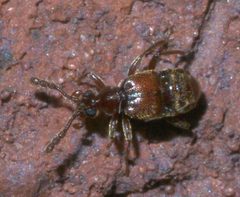
Hamotus opimus is a of ant-loving beetle in the Staphylinidae, first described by Fletcher in 1932. It belongs to the Pselaphinae, a diverse group of small rove beetles often associated with colonies. The species is known from scattered records across the eastern and south-central United States. Like other members of its , it likely lives in close association with ants, though specific details of this relationship remain poorly documented.
Pronunciation
How to pronounce Hamotus opimus: //həˈmoʊtəs oʊˈpaɪməs//
These audio files are automatically generated. While they are not always 100% accurate, they are a good starting point.
Identification
Hamotus opimus can be distinguished from other Hamotus by the specific morphological characters described in Fletcher's 1932 original description, including details of the , pronotum, and male genitalia. Members of the Hamotus are small, compact pselaphine beetles with short and characteristic foveate (pitted) body sculpturing. Accurate identification to species level requires examination of microscopic features and comparison with or detailed taxonomic keys.
Images
Habitat
Records indicate presence in forested regions of the eastern and south-central United States. As a member of Pselaphinae, it likely inhabits leaf litter, soil, and decaying wood in mesic woodland environments.
Distribution
Documented from Florida, Mississippi, Oklahoma, South Carolina (questionable), and Virginia in the United States. The GBIF distribution records suggest a range concentrated in the southeastern and south-central United States, though the may be undercollected due to its small size and specialized requirements.
Host Associations
- Formicidae - myrmecophilyAnt-loving beetle; specific unknown
Similar Taxa
- Other Hamotus speciesCongeneric share compact body form, short , and foveate sculpturing; require detailed examination of male genitalia and antennal structure for separation
- Other Pselaphinae generaMany small pselaphine beetles resemble Hamotus in general habitus; accurate identification relies on tribal and generic characters including antennal club structure and presence of characteristic foveae
More Details
Taxonomic note
The epithet 'opimus' (Latin: rich, fertile, abundant) was applied by Fletcher in 1932. The Hamotus contains multiple North American species, many of which are poorly known and difficult to distinguish without examination.
Collection status
Only one iNaturalist observation recorded as of source data, suggesting this is rarely encountered or underreported by general naturalists. Specialized collection techniques such as sifting leaf litter and use of Winkler or Berlese extractors are typically required for sampling Pselaphinae.