
Actium
Casey, 1886
Species Guides
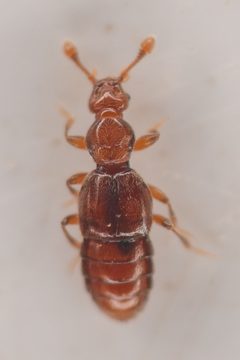
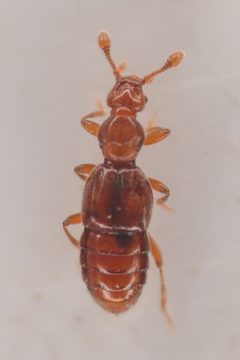
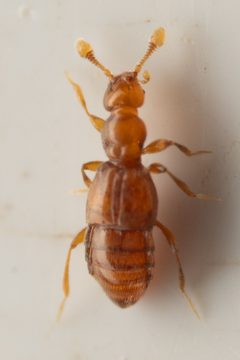
1- Actium barri(Barr's Ant-loving Rove Beetle)
Actium is a of rove beetles (Staphylinidae) in the Pselaphinae, first described by Casey in 1886. It belongs to the tribe Trichonychini, a group of small beetles often associated with leaf litter and soil . The genus is part of the diverse Pselaphinae, which are characterized by reduced wing venation and compact body forms adapted for life in confined spaces.
Pronunciation
How to pronounce Actium: //ˈæktiəm//
These audio files are automatically generated. While they are not always 100% accurate, they are a good starting point.
Identification
As a within Pselaphinae, Actium likely exhibit the 's characteristic compact, hump-backed body form with short that leave most of the exposed. Members of the tribe Trichonychini typically have distinctive antennal structures and may show reduced or modified mouthparts. Specific diagnostic features for Actium are not well-documented in available sources.
Images
Habitat
Based on the of related Pselaphinae, in this likely inhabit leaf litter, soil, and decaying organic matter. Trichonychini are generally found in moist terrestrial microhabitats.
Similar Taxa
- Other Trichonychini generaShare the same tribe-level characteristics including compact body form and antennal structure; specific separation requires examination of subtle morphological differences in mouthparts, genitalia, and thoracic structure
- Other Pselaphinae generaSimilar overall body plan with short and exposed ; distinguished by tribal and generic-level characters in antennal club structure, foveal patterns on the pronotum and elytra, and male genitalia
More Details
Taxonomic history
The was established by Thomas Lincoln Casey in 1886. The name Actium has been reused in other contexts, most notably for the ancient Greek town and peninsula, but also appears in other biological . The genus is valid under the International Code of Zoological Nomenclature.