
Carpelimus
Leach, 1819
spiny-legged rove beetles
Species Guides
11- Carpelimus aridus
- Carpelimus bilineatus
- Carpelimus dentiger
- Carpelimus filarius
- Carpelimus gracilis
- Carpelimus obliquus
- Carpelimus pertenuis(spiny-legged rove beetle)
- Carpelimus probus(spiny-legged rove beetle)
- Carpelimus quadripunctatus
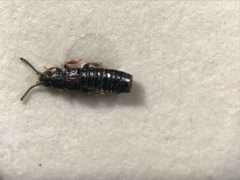
Carpelimus is a of rove beetles (Staphylinidae: Oxytelinae) containing at least 100 described . Members are commonly referred to as spiny-legged rove beetles. The genus has a broad distribution spanning the Palearctic, Oriental, and other regions, with recent records documenting range extensions in Southeast Asia and South Asia. At least one species, Carpelimus rivularis, has been documented as a for phoretic mites (Pygmephoridae).


Pronunciation
How to pronounce Carpelimus: //kɑːrˈpɛlɪməs//
These audio files are automatically generated. While they are not always 100% accurate, they are a good starting point.
Identification
Carpelimus belongs to the tribe Thinobiini within the Oxytelinae. The 'spiny-legged rove beetles' suggests distinctive leg armature, though specific diagnostic features for the versus related oxyteline genera are not detailed in available sources. -level identification requires examination of subtle morphological characters.
Images
Distribution
Widespread across the Palearctic and Oriental regions. Documented from: Europe (Denmark, Norway, Sweden, Germany), Asia (China: Jiangxi, Yunnan, Guangdong, Hainan provinces; Vietnam; Cambodia; Thailand; Malaysia: Borneo; Indonesia: Sulawesi; India: West Bengal, Tamil Nadu, Madhya Pradesh; northern Iran).
Host Associations
- Apediculaster carpelimus - phoretic mitePygmephoridae mite documented on Carpelimus (Paratrogophloeus) rivularis in northern Iran; phoretic females use the for
Similar Taxa
- Other Oxytelinae generaCarpelimus is distinguished from related by tribal assignment (Thinobiini) and presumably by leg spination patterns, though specific comparative characters require literature
Sources and further reading
- BugGuide
- Wikipedia
- GBIF taxonomy match
- iNaturalist taxon
- NCBI Taxonomy
- Catalogue of Life
- New data (for 2020) on the distribution of species from the genus <i>Carpelimus</i> Leach, 1819 (Coleoptera: Staphylinidae: Oxytelinae) in the Oriental Region
- <strong>A new genus and species of the family Pygmephoridae (Acari: Heterostigmata) associated with <em>Carpelimus rivularis</em> (Coleoptera: Staphylinidae)</strong>