
Leptotyphlinae
Fauvel, 1874
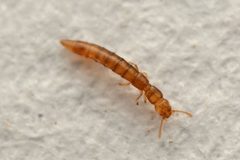
Leptotyphlinae is a of minute rove beetles (Staphylinidae) characterized by extreme miniaturization and subterranean adaptations. are eyeless, wingless, and measure less than 1.8 mm in length. The subfamily contains at least nine and 13 in North America, with records from western states and Florida.
Pronunciation
How to pronounce Leptotyphlinae: /ˌlɛptoʊˈtɪflaɪniː/
These audio files are automatically generated. While they are not always 100% accurate, they are a good starting point.
Identification
Distinguished from other rove beetle by the combination of: minute size (<1.8 mm), complete absence of and wings, and 3-3-3 tarsal formula. The reduced abdominal segmentation (appearing as seven segments) differs from the typical rove beetle condition. Similar subfamilies in Staphylinidae generally retain eyes or wings, or possess different tarsal formulas.
Images
Appearance
are extremely small, measuring less than 1.8 mm in length. The body is eyeless and wingless, with an apparent seven abdominal segments. are 3-segmented on all legs (tarsal formula 3-3-3).
Habitat
Inhabits leaf litter and deep soil layers. Associated with the soil microhabitat rather than surface environments.
Distribution
Documented from western North American states and Florida. Nine and 13 confirmed from North America; broader distribution likely but poorly documented due to collection difficulties.
Diet
Has been observed as of mites, collembola, and other soil arthropods. Specific dietary preferences remain incompletely documented.
Behavior
Subterranean and cryptic; inhabits deep soil and leaf litter microhabitats. Winglessness and eyelessness indicate permanent subterranean existence with limited capability.
Ecological Role
in soil and leaf litter , potentially regulating of microarthropods including mites and springtails.
Human Relevance
No documented direct interactions with humans. Ecological significance lies in soil functioning.
Similar Taxa
- Other Staphylinidae subfamiliesLeptotyphlinae differs in the unique combination of eyelessness, winglessness, and 3-3-3 tarsal formula at such small body size; most other rove beetles retain , wings, or both, and often have different tarsal segmentation.
More Details
Taxonomic note
Authored by Fauvel in 1874. The is part of the megadiverse rove beetle Staphylinidae, one of the largest animal families.