
Placusa
Erichson, 1837
Species Guides
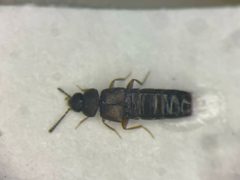
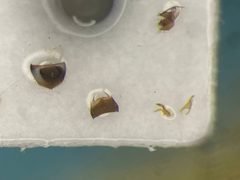
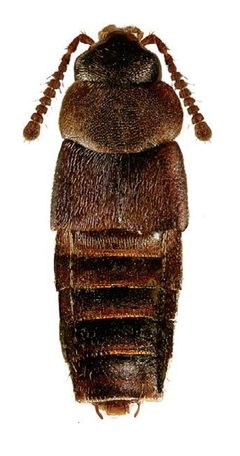
2Placusa is a of rove beetles (Staphylinidae: Aleocharinae) established by Erichson in 1837. The genus has an almost distribution with records from North America, Europe, and South America. Canadian fauna includes eight , with ecological studies indicating primarily fungivorous habits in subcortical . Larvae have been described and are morphologically similar to those of the related genus Euvira.
Pronunciation
How to pronounce Placusa: /ˈplɑː.kjuː.sə/
These audio files are automatically generated. While they are not always 100% accurate, they are a good starting point.
Images
Habitat
Subcortical (under bark).
Distribution
Almost . Documented from Canada (British Columbia, New Brunswick, Ontario, Quebec), Denmark, Norway, Sweden, and Colombia (Parque Nacional Natural Serranía de Chiribiquete).
Diet
Primarily fungivorous. Gut contents of larvae and contain large masses of , fruiting structures, and similar parts of imperfect fungi.
Life Cycle
Larval stage described for P. despecta and P. tachyporoides; larvae occur in association with .
Similar Taxa
- EuviraLarvae are morphologically very similar; structural features and chaetotaxy require comparison for distinction.
More Details
Taxonomic revisions
Placusa turbata Casey has been synonymized with P. tachyporoides (Waltl). Oxypoda minuta Sachse has been transferred to Placusa and synonymized with P. despecta.
New species
Two were described from Canada: P. pseudosuecica Klimaszewski and P. canadensis Klimaszewski.