
Phloeoporina
Thomson, C. G., 1859
Genus Guides
1Phloeoporina is a subtribe of rove beetles (Staphylinidae) within the tribe Oxypodini and Aleocharinae. These beetles are small, typically myrmecophilous or termitophilous, living in association with ants or . The subtribe was established by Thomson in 1859 and contains multiple distributed primarily in the Holarctic region. Members are characterized by morphological adaptations for life in social insect colonies.
Pronunciation
How to pronounce Phloeoporina: /ˌfloʊiːəˈpɔːrɪnə/
These audio files are automatically generated. While they are not always 100% accurate, they are a good starting point.
Identification
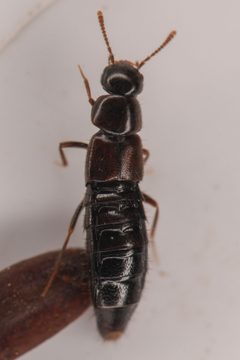
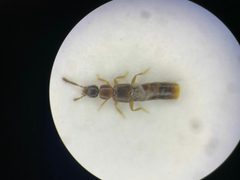
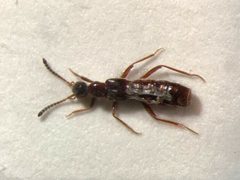
Phloeoporina are distinguished from other Oxypodini by a combination of features: compact body form, shortened exposing most of the (typical of Staphylinidae), and often reduced or modified sensory structures. The maxillary palps are frequently elongate, and the may show clubbed or modified segments. Specific identification requires examination of genitalia and detailed mouthpart . Separation from the related subtribe Meotica is subtle and relies on tarsal formula and details of the .
Images
Habitat
occur primarily in nests of ants (Formicidae) and (), including subterranean chambers, rotting wood inhabited by colonies, and soil adjacent to nest structures. Some species inhabit leaf litter and decaying organic matter in close proximity to colonies.
Distribution
Holarctic distribution, with records from Europe, Asia, and North America. Individual within the subtribe show varying ranges, with some restricted to western Palearctic regions and others transcontinental in the Nearctic.
Host Associations
- Formicidae - inhabits nests ofmyrmecophilous
- Isoptera - inhabits nests oftermitophilous
Behavior
Strongly myrmecophilous or termitophilous; and larvae live within colonies. Integration mechanisms vary by and may include chemical mimicry of host cuticular hydrocarbons, behavioral mimicry, or physical defense. Some species are believed to be , feeding on host or regurgitated food, while others may be scavengers within the nest environment.
Ecological Role
As or of social insects, members of Phloeoporina function as nest associates with poorly understood trophic relationships. They may act as , scavengers, or kleptoparasites within colonies. Their presence in and nests represents a specialized ecological guild within the staphylinid radiation.
Similar Taxa
More Details
Taxonomic history
Thomson's 1859 establishment of Phloeoporina predated modern understanding of myrmecophily in staphylinids. The subtribe has undergone repeated revision, with transferred to and from related subtribes based on phylogenetic analyses. Current circumscription follows molecular and morphological studies of the Oxypodini.
Host specificity
associations are documented for relatively few ; many records rely on single observations. The degree of host specificity (monophagy versus oligophagy) remains uncertain for most .