
Hypocyphtini
Laporte de Castelnau, 1835
Genus Guides
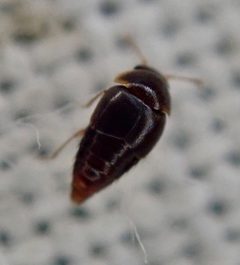
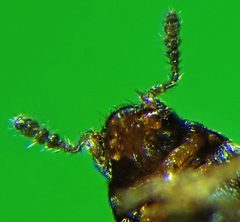
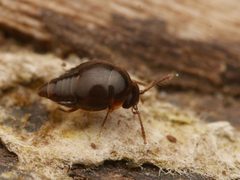
3Hypocyphtini is a tribe of rove beetles ( Staphylinidae, Aleocharinae) established by Laporte de Castelnau in 1835. Members of this tribe are small to minute beetles characterized by compact body forms and reduced or modified wing structures. The tribe is distinguished from related aleocharine tribes primarily by genitalic and mouthpart . Hypocyphtini are primarily associated with decaying organic matter and are found across multiple continents, though individual species tend to have narrow distributions.
Pronunciation
How to pronounce Hypocyphtini: /ˌhaɪpoʊˈsɪfˌtaɪni/
These audio files are automatically generated. While they are not always 100% accurate, they are a good starting point.
Identification
Hypocyphtini can be distinguished from other Aleocharinae tribes by the combination of: compact, often humpbacked body; short ; reduced wing venation or aptery in many ; and asymmetrical male genitalia. The tribe resembles the tribe Myrmedonota in general form but differs in mouthpart structure and details of the tarsal formula. Definitive identification requires examination of male genitalia and mouthpart . The tribe is most readily separated from the similar Gyrophaenini by the structure of the maxillary mala and the form of the mesocoxal cavities.
Images
Habitat
occur in moist microhabitats rich in decaying organic matter, including leaf litter, compost, decaying fungi, rotting wood, and . Some species are associated with nests or colonies. are typically humid and shaded, with stable temperature and moisture regimes.
Distribution
Recorded from multiple continents including North America, South America, Europe, Asia, and Australia. Distribution is patchy and many appear to have narrow regional ranges. The tribe is absent from Antarctica and has limited representation on oceanic islands.
Seasonality
Activity patterns vary by and region. In temperate zones, are most commonly encountered in spring through autumn; some species overwinter as adults. In tropical regions, activity appears to continue year-round with peaks during wet seasons.
Behavior
Most are slow-moving and cryptic, remaining concealed in decaying substrates. When disturbed, they may curl the defensively or remain motionless. Some species exhibit phoretic , attaching to larger insects for . Social has been reported in some lineages, with species living within or colonies.
Ecological Role
Human Relevance
No direct economic importance. Occasionally encountered in composting operations or by entomologists sampling litter fauna. Some may be incidental indicators of quality in ecological assessments.
Similar Taxa
- MyrmedonotaSimilar compact body form and association with ants, but differs in tarsal formula and details of mouthpart structure
- GyrophaeniniSimilar small size and association with fungi, but distinguished by maxillary mala structure and mesocoxal cavity form
- FalagriiniOverlapping preferences, but Falagriini typically have more elongate body form and different antennal insertion
More Details
Taxonomic history
The tribe has undergone significant revision, with many transferred to or from Hypocyphtini based on phylogenetic studies. The current circumscription is based on molecular and morphological data from the early 2000s onward.
Collection methods
Best collected by sifting leaf litter and extracting specimens using or Winkler extractors. Pitfall trapping is less effective due to small size and cryptic habits. Specimens should be point-mounted or carded for study; genitalic dissection required for definitive identification.