
Platypsyllinae
Ritsema, 1869
mammal-nest beetles
Genus Guides
3- Leptinillus(mammal-nest beetles)
- Leptinus(mammal nest beetles)
- Platypsyllus(beaver beetle)
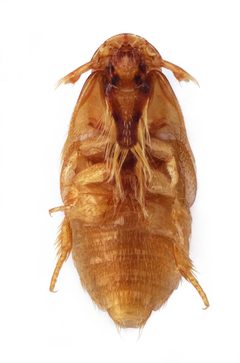
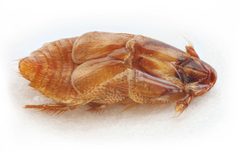
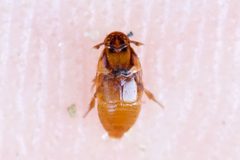
Platypsyllinae is a of small beetles within Leiodidae, commonly known as mammal-nest beetles. The group was formerly recognized as the Leptinidae, but was reclassified as a subfamily based on nomenclatural priority. Members of this subfamily are specialized inhabitants of mammal nests and burrows, exhibiting adaptations for this commensal lifestyle. The subfamily includes four : Leptinillus, Leptinus, Platypsyllus, and Silphopsyllus.
Pronunciation
How to pronounce Platypsyllinae: //plætɪpˈsɪlaɪniː//
These audio files are automatically generated. While they are not always 100% accurate, they are a good starting point.
Identification
Members of Platypsyllinae can be distinguished from other Leiodidae by their highly flattened, compact body form adapted for moving through mammal fur and nest material. The is characterized by reduced or absent wings, short with compact clubs, and legs modified for clinging to mammals. They lack the well-developed elytral typical of many other leiodid beetles and have a somewhat pubescent or velvety .
Images
Habitat
Strictly associated with mammal nests, burrows, and the bodies of mammals. Found in the fur of rodents and , as well as in nest debris and bedding material. Occupies dark, humid microhabitats within dwellings.
Distribution
Holarctic distribution, with records from North America and Eurasia. Distribution closely follows that of their mammal .
Host Associations
- mammals - commensalFound in fur and nests of rodents and ; specific relationships vary by
Behavior
Exhibits phoretic , clinging to mammals for between nests. Movement is generally slow and cryptic, suited to remaining undetected within host fur or nest material.
Ecological Role
Scavengers within mammal nests, likely feeding on organic debris, shed hair, skin flakes, and other detritus accumulated in dwellings.
Similar Taxa
- LeiodinaeOther of Leiodidae lack the extreme body flattening, reduced wings, and specialized mammal-association of Platypsyllinae; they are generally more convex and free-living in soil or fungi
- PtomaphaginaeAnother leiodid with more convex, less flattened bodies and no known mammal-association; are generally longer and more slender
More Details
Taxonomic history
The group has undergone significant taxonomic revision. Formerly treated as the Leptinidae, it was downgraded to status within Leiodidae when Platypsyllidae was recognized as having nomenclatural priority. The current classification reflects phylogenetic relationships with other round fungus beetles (Leiodidae) rather than a distinct familial lineage.