
Hydnobius substriatus
LeConte, J. L., 1863
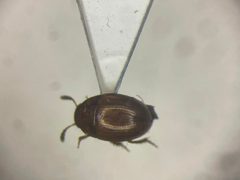
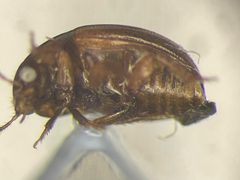
Hydnobius substriatus is a of round fungus beetle in the Leiodidae, described by John Lawrence LeConte in 1863. It is distributed across northern North America, with records from Canada and the northern United States. As a member of the Hydnobius, it is likely associated with fungal , though specific ecological details remain poorly documented.
Pronunciation
How to pronounce Hydnobius substriatus: /hɪdˈnoʊbiəs ˌsʌbstraɪˈeɪtəs/
These audio files are automatically generated. While they are not always 100% accurate, they are a good starting point.
Identification
Members of Hydnobius can be distinguished from other Leiodidae by their compact, convex body form and relatively short with weakly clubbed tips. The specific epithet "substriatus" suggests subtle striations on the , though this character requires verification. Positive identification to level requires examination of male genitalia or other fine morphological details.
Images
Habitat
Specific associations are not documented, though are typically found in forested environments associated with decaying wood and fungi.
Distribution
Canada (Alberta, British Columbia, Manitoba, New Brunswick, Newfoundland and Labrador, Nova Scotia, Northwest Territories, Ontario, Quebec, Yukon Territory) and the United States (Alaska, California, Colorado, Maine, Michigan, Minnesota, Montana, New Hampshire, New Mexico, New York, Oregon, Utah, Wyoming).
Similar Taxa
- Other Hydnobius speciesShare compact body form and fungal associations; require genital dissection or subtle elytral characters for separation.
- Other Leiodidae genera (e.g., Agathidium, Anisotoma)Similar small, convex body plan but differ in antennal structure and degree of elytral convexity.
More Details
Taxonomic history
The was described by J.L. LeConte in 1863, a prolific 19th-century American entomologist who described thousands of North American beetles.
Data deficiency
Only two observations are recorded in iNaturalist as of the knowledge cutoff, indicating this is rarely encountered or underreported.