
Ochthebiinae
Thomson, C. G., 1859
minute moss beetles
Genus Guides
4- Enicocerus
- Gymnochthebius(minute moss beetles)
- Neochthebius
- Ochthebius(minute moss beetles)
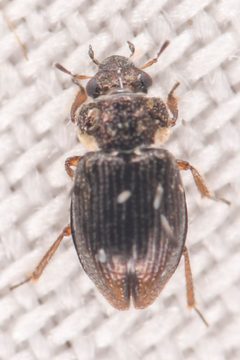
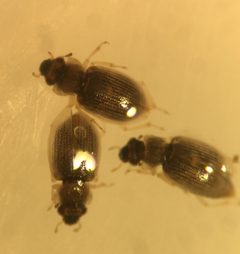
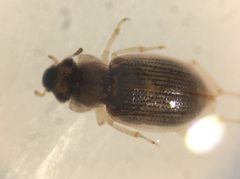
Ochthebiinae is a of minute moss beetles ( Hydraenidae) comprising approximately 14 and over 650 described . It represents the second most species-rich subfamily within Hydraenidae and exhibits exceptional ecological diversity, including terrestrial species and those inhabiting nearly all aquatic environments from freshwater to hypersaline waters. The subfamily contains two tribes: Ochtheosini (four species in three genera) and the much larger Ochthebiini. Molecular phylogenetic studies have revised the classification of Ochthebiini, recognizing six genera and establishing multiple subgenera within the diverse genus Ochthebius.
Pronunciation
How to pronounce Ochthebiinae: /ˌɒkθəˈbaɪɪniː/
These audio files are automatically generated. While they are not always 100% accurate, they are a good starting point.
Images
Habitat
Ecologically diverse, encompassing terrestrial and nearly all types of aquatic environments including hypersaline waters. occur in freshwater systems, brackish waters, and extreme saline conditions. Specific microhabitat preferences vary by and species group.
Distribution
Worldwide distribution with approximately 650 documented across multiple continents.
More Details
Taxonomic revision
Recent molecular phylogenetic work (Jäch et al., 2016) reclassified the tribe Ochthebiini into six : Meropathus, Ochthebius, Protochthebius, Prototympanogaster, Tympallopatrum, and Tympanogaster. The genus Ochthebius was divided into nine subgenera, with 17 groups recognized within Ochthebius s.s.
Ecological significance
Ochthebiinae is noted as the most ecologically diverse hydraenid , with adaptations spanning from fully terrestrial to hypersaline aquatic . This breadth makes the group important for studying evolutionary transitions between habitat types.