
Prionocyphon limbatus
LeConte, 1866
Black-spotted Marsh Beetle
Prionocyphon limbatus is a small marsh beetle in the Scirtidae, commonly known as the Black-spotted Marsh Beetle. It inhabits wet environments across eastern North America. The is part of a family whose larvae are aquatic or semi-aquatic, though specific details for this species remain limited.

Pronunciation
How to pronounce Prionocyphon limbatus: /ˌpraɪəˌnɒˈsɪfɒn lɪmˈbeɪtəs/
These audio files are automatically generated. While they are not always 100% accurate, they are a good starting point.
Identification
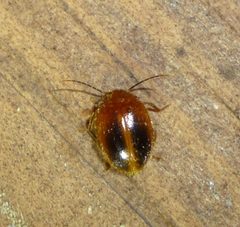
Distinguished from other Scirtidae by the combination of dark with pale, often yellowish, markings at the base and apex, creating a 'limbatus' (bordered) appearance. The pronotum is typically pale with dark markings. Final determination requires examination of male genitalia.
Images
Habitat
Associated with marshy , wet meadows, and edges of ponds and streams. Larvae develop in moist, decaying organic matter in or near water.
Distribution
Eastern North America: recorded from New Brunswick, Nova Scotia, and Ontario in Canada, with range extending southward through the northeastern and north-central United States.
Seasonality
have been observed from late spring through summer (May–August); peak activity likely varies by latitude.
Life Cycle
Larvae are aquatic or semi-aquatic, developing in decaying plant material in water or saturated soils. are terrestrial.
Behavior
are often found on vegetation near water. Larvae are known to feed on decaying organic matter in aquatic environments.
Ecological Role
Larvae contribute to decomposition of plant material in wetland ; role as prey for aquatic and terrestrial likely but not documented.
Human Relevance
No significant economic or medical importance. Occasionally encountered by wetland biologists and citizen scientists.
Similar Taxa
- Prionocyphon discoideusSimilar size and preference; distinguished by elytral pattern lacking the distinct pale and basal borders of P. limbatus.
- Other Scirtidae genera (e.g., Cyphon, Scirtes)General resemblance in body form; Prionocyphon have more elongate body and different antennal club structure.
More Details
Taxonomic history
Described by John Lawrence LeConte in 1866, the specific epithet 'limbatus' refers to the bordered or margined appearance of the .