
Nyholmia
Klausnitzer, 2013
marsh beetles
Species Guides
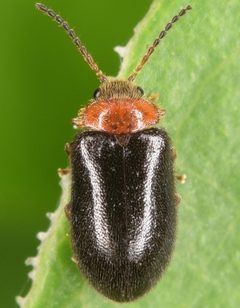
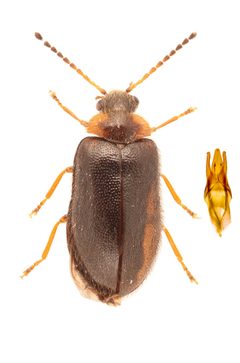
2Nyholmia is a of marsh beetles in the Scirtidae, established by Klausnitzer in 2013. The genus comprises five described distributed across North America and Japan. As members of Scirtidae, these beetles are associated with moist or aquatic .

Pronunciation
How to pronounce Nyholmia: //naɪˈhoʊl.mi.ə//
These audio files are automatically generated. While they are not always 100% accurate, they are a good starting point.
Identification
Nyholmia can be distinguished from other Scirtidae by genitalic characters and specific combinations of elytral color patterns. The genus was erected to accommodate previously placed in other genera based on morphological revisions. Species-level identification relies on examination of male genitalia and subtle differences in pronotal and elytral markings.
Images
Habitat
Associated with marshy environments, wetlands, and moist terrestrial typical of the Scirtidae. Larval stages are likely aquatic or semi-aquatic, though specific microhabitat preferences for Nyholmia remain poorly documented.
Distribution
Recorded from North America (United States) and Japan (Oki Islands). The has a disjunct distribution with western Nearctic and eastern Palearctic representatives.
Ecological Role
As decomposers in wetland , contributing to nutrient cycling in marsh and aquatic environments.
Similar Taxa
- CyphonAnother in Scirtidae with which Nyholmia were historically confused; distinguished by genitalic and elytral pattern.
- ElodesSimilar marsh beetle in Scirtidae; Nyholmia separated based on detailed morphological study of and genitalia.
More Details
Taxonomic history
The was established by Klausnitzer in 2013 to accommodate previously assigned to other scirtid genera, particularly based on re-examination of and recognition of distinct genitalic characters.
Species composition
The five described include: N. bicolor (LeConte, 1853), N. collaris (Guérin-Méneville, 1843), N. confusa (Brown, 1930), N. drymophila (Young & Stribling, 1990), and N. okiensis Yoshitomi & Hayashi, 2016. The last species represents the only Palearctic member, described from the Oki Islands of Japan.