
Herthania concinna
(LeConte, 1853)
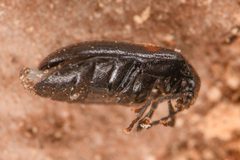
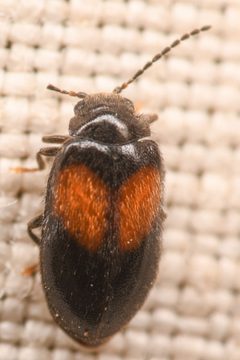
Herthania concinna is a of marsh beetle in the Scirtidae. It occurs in North America, with confirmed records from Alberta and British Columbia, Canada. The species was originally described by LeConte in 1853 and is currently recognized as a synonym of Cyphon concinnus in some taxonomic databases. As a member of Scirtidae, it inhabits moist environments associated with marsh .
Pronunciation
How to pronounce Herthania concinna: //hɛrˈθeɪniə kɒnˈsɪnə//
These audio files are automatically generated. While they are not always 100% accurate, they are a good starting point.
Identification
The Herthania is distinguished from related scirtid genera by subtle morphological characters of the and pronotum. -level identification within the genus requires examination of male genitalia and detailed comparison of elytral punctation patterns. H. concinna specifically may be separated from by the finer, more regular elytral striation and the relatively elongate body form compared to the more rounded H. testacea.
Images
Habitat
Marsh beetles in the Scirtidae are consistently associated with moist or wetland . H. concinna has been recorded from marsh environments in western North America. The larvae of scirtid beetles typically develop in decaying plant matter, , or mud in shallow water or saturated soils.
Distribution
North America. Confirmed present in Alberta and British Columbia, Canada. The has been documented in western regions of the continent.
Life Cycle
Scirtidae larvae are aquatic or semi-aquatic, developing in moist substrates with decaying organic material. are terrestrial but remain in proximity to larval . Specific timing for H. concinna has not been documented.
Ecological Role
As decomposers in marsh , scirtid beetles contribute to nutrient cycling through larval feeding on decaying plant material and . Their role in specific has not been quantified for this .
Similar Taxa
- Herthania testaceaSimilar marsh beetle in the same , distinguished by more rounded body form and coarser elytral punctation
- Cyphon species to which H. concinna has been synonymized; morphological separation requires examination of antennal structure and male genitalia